Advertisement
Taiwan
Opinion

China’s reunification dream will remain out of reach as long as Taiwanese feel they don’t belong

Chi Wang says Xi Jinping should focus on cultivating friendship and understanding and avoid threats towards Taiwan, to avoid hardening people’s resentment

Reading Time:4 minutes
Why you can trust SCMP
The Taiwan issue is certainly a difficult balancing act, with no easy solution. Illustration: Craig Stephens
Chi Wang
In early January, the US House of Representatives passed the Taiwan Travel Act “to encourage visits between the United States and Taiwan at all levels”. Though the bill has yet to be signed into law, the Chinese spokesperson for the Ministry of Foreign Affairs, Lu Kang, was quick to criticise it. Lu claims the bill, which is more symbolic than substantive, would violate the “one-China” policy and encourage Taiwan independence.
With tense cross-strait relations and provocative moves like this from the US, Chinese President Xi Jinping is faced with a dilemma: Taiwan does not wish to be part of China, and China’s dreams of reuniting with Taiwan may already be out of reach.

As a Chinese American, I have a long association with people in Taiwan. I have built a connection to Taiwan through family friends, relationships with government officials and even students. Whether Beijing thinks Taiwan is still part of the same country, Taiwan does not consider itself part of mainland China. The time for easy reunification has long since passed.

Advertisement

If the people of Taiwan do not consider themselves part of a unified country, they will never be unified. Beijing and Taipei must take time to understand each other before any true unification is possible. Hopefully my own experiences, at the very least, can provide some understanding among them.

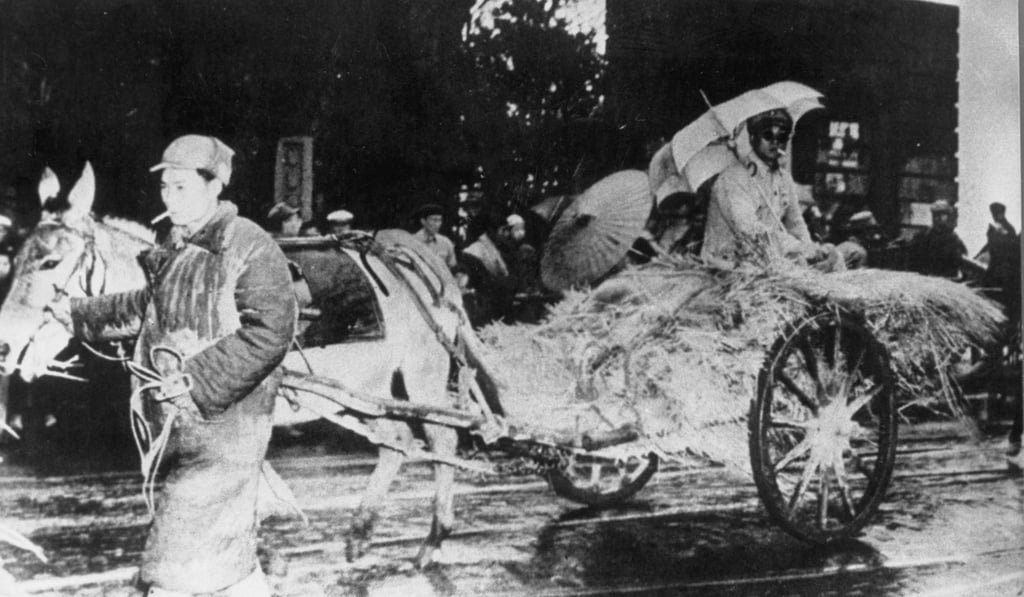
In April 1949, I was preparing to study in America. I had travelled through the countryside from Beijing to China’s eastern coastal Shandong province. There was no public transport then; the roads had been destroyed by the civil war between Mao Zedong’s communists and the Kuomintang government of Chiang Kai-shek. I travelled with seven or eight classmates through the most destitute areas of China, catching rides on the backs of trucks and bicycles and sleeping on the floor. These areas, “liberated” by the victorious communists, could not have been poorer.
Advertisement
A Kuomintang army officer makes his escape from Shanghai in May 1949 as the port city falls to the communists near the end of the Chinese civil war. By the end of 1949, the communist forces had established the People’s Republic of China in Beijing and the KMT had fled to Taiwan. Photo: AP
Advertisement
Select Voice
Choose your listening speed
Get through articles 2x faster
1.25x
250 WPM
Slow
Average
Fast
1.25x