Experience counts in the city’s fight against dirty money
For the sake of the city’s reputation, the government should do what it can to maintain competitive career prospects and remuneration for people who have the experience and ability to match wits with wrongdoers

No reputable financial centre wants to see its image tarnished internationally by failure to comply with or to enforce laws against money-laundering of the proceeds or funding of crime, including drug trafficking and terrorism.
There are two reasons for Hong Kong authorities to reflect on the city’s performance in this regard against international benchmarks. One is a risk assessment issued by the Financial Services and Treasury Bureau, confirming a Post report that the city’s financial system is groaning under the weight of a deluge of suspicious transaction reports.
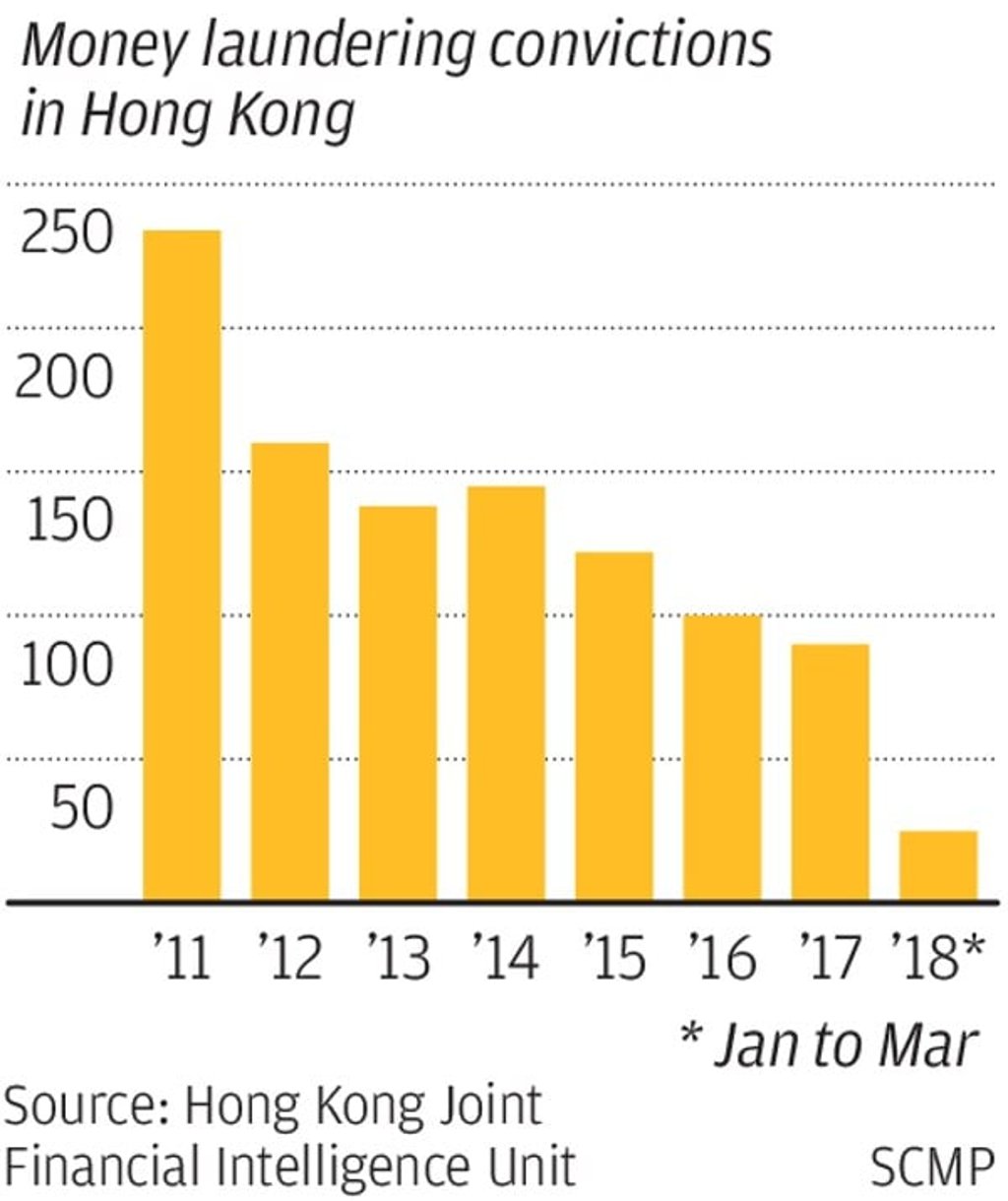
The other is that the city faces a major audit of anti-money-laundering capabilities by a team from the Paris-based international dirty money watchdog, the Financial Action Task Force, expected here in late October.
At first sight the Post report rings loud alarm bells, not least because in 2017 the city’s Joint Financial Intelligence Unit (JFIU) received 92,115 reports from banks and other financial institutions of local, national or international transactions with suspected links to money laundering or terrorist financing.