China requires strong navy to help protect its global interests
The nation has increasing responsibilities towards peace and economic growth, and that is something the world should welcome, not worry about

The start of sea trials for China’s first domestically designed and built aircraft carrier marks a new stage in the country’s rise as a naval power. The 50,000-tonne vessel boasts industrial capability, technological know-how and the emergence of the nation as a world power.
Those are matters of concern for Asian neighbours and the United States, which worry about Chinese intentions. But those who voice fears are ignoring interests that need protecting, among them maritime boundaries, countries that are part of the “Belt and Road Initiative”, citizens overseas, shipping and investments.
Indigenous shipbuilding is a learning process and the as yet unnamed vessel makes marked advances on the Liaoning, the nation’s first carrier, which was bought from Ukraine and fitted out for training and combat.
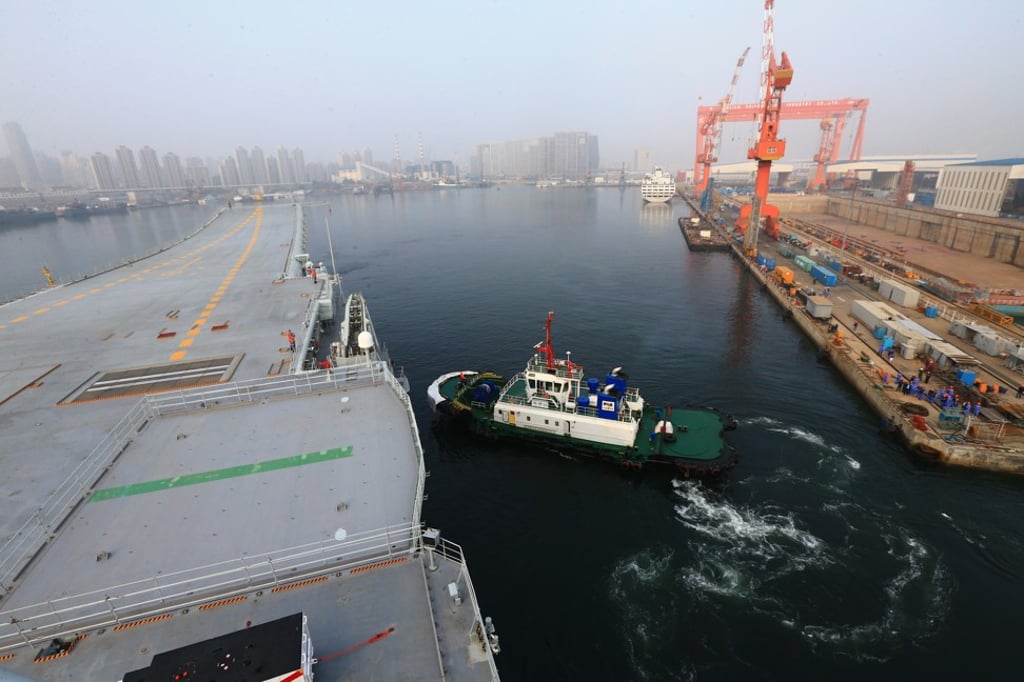
Although having a similar design and displacement, the new carrier has been modified and is longer and wider, enabling it to carry about a dozen more J-15 fighters. But while radar and electronics have been improved, it still has conventionally powered engines, limiting range and speed.
Despite that, in development terms, it is a significant leap forward and a third carrier, presently under construction, is likely to be of the latest generation and nuclear-powered.