Advertisement

100 years of Western hypocrisy: how the ghosts of 1919 still haunt China as it forges its own development path
- The failure of the Paris Peace Conference not only led to another world war, it also taught China to be wary of the US-led global order. It triggered the May Fourth Movement and a brand of nationalism that is still potent today
3-MIN READ3-MIN

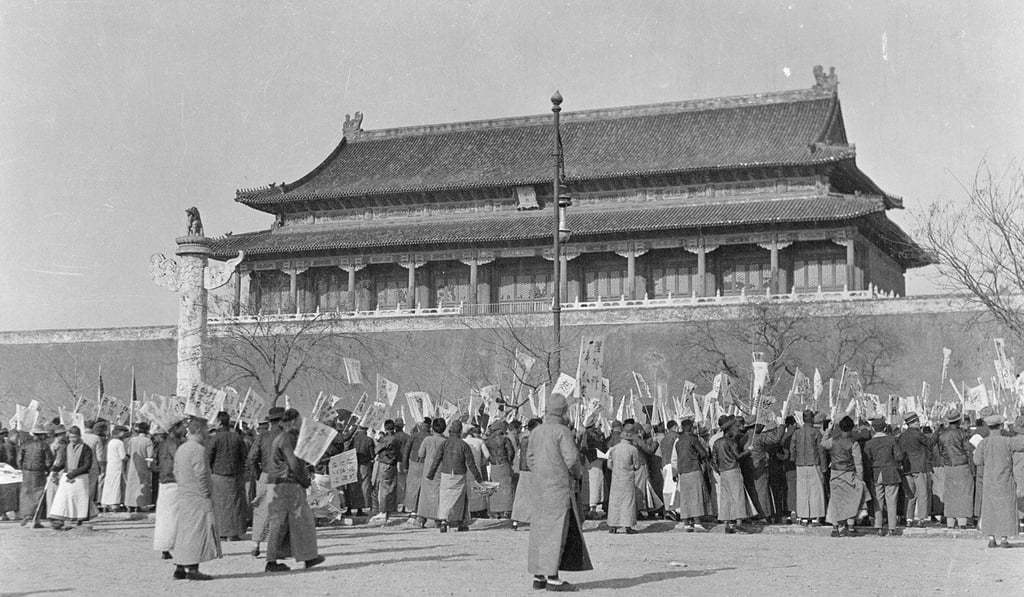
A century ago, Paris was the centre of the world’s attention, including China’s. At the Paris Peace Conference in 1919, unfair treatment of China triggered the May Fourth Movement – with profound repercussions for China’s intellectual, social and political development. Amid protests and boycotts, Chinese society was radicalised away from intellectual elitism. Western liberal democracy was discredited while Bolshevism’s appeal grew. The Communist Party of China was founded two years later. The movement’s legacy has resonated through recent Chinese history.
China’s recent naval parade in Qingdao, with Japan’s participation, was rich in symbolism. At the end of the first world war, former German concessions in Shandong, including Qingdao, had not been restored to China. Instead, Western powers acceded to the demands of Japan, which had seized the territories during the war – despite the contribution made by the Chinese Labour Corps in the war on the side of the Allies.
The situation was exceedingly complex. China’s entry into the war had perhaps been too little, too late. Japan had made secret treaties with some Western powers, as well as Chinese warlords. China was a country divided into north and south. Beijing’s communication with its delegation to Paris was confused. Under the circumstances, the Chinese delegation made heroic, though futile, attempts to argue China’s case, in impeccable French and English.
Advertisement
In Paris in 1919, the very young Republic of China was trying to find its footing. But even though it was on the winning side, it was treated like a third-class citizen at the conference. Fast-forward a century, and world leaders gathered in Beijing last month for the Belt and Road Forum. But there was no high-level representation from Japan, the villain of 1919, or the United States, the white knight who had failed to deliver at the Paris Peace Conference.
The May Fourth Movement presented China with Western models that were polar opposites – the US and the Soviet Union – but meant wholesale westernisation in either case. However, Liang Qichao, a leading public intellectual and reformist of China who had advocated the country’s entry into the first world war, toured Europe at the time of the Paris talks as a private citizen and returned with prescient insights into China’s development path.
Advertisement
Advertisement
Select Voice
Select Speed
1.00x