Advertisement
How negotiations gave Myanmar and China both a better deal in joint port project
Andre Wheeler says that concerns over Myanmar falling into a Chinese ‘debt trap’ through the belt and road development plan can be assuaged by a committed effort by both parties to reach a mutually beneficial agreement, even if that includes some hard bargaining
4-MIN READ4-MIN

Discussion on the China-Myanmar relationship has focused on the risks rather than the opportunities that the Belt and Road Initiative, of which the China-Myanmar economic corridor is one part, offers. In an earlier piece, I argued that, depending on the economic development model adopted, the belt and road plan could help the country leapfrog development and lift its citizens out of poverty.
These claims had an important caveat attached, arguing that all participants in the belt and road scheme must ensure that the agreements signed should protect a country’s sovereignty, so as not to become a victim of the alleged pseudo-colonisation by China. This approach would also demonstrate China’s transparency in dealing with belt and road participants and affirm the position that the belt and road plan is for the benefit of all and not designed to create a New World hegemon.
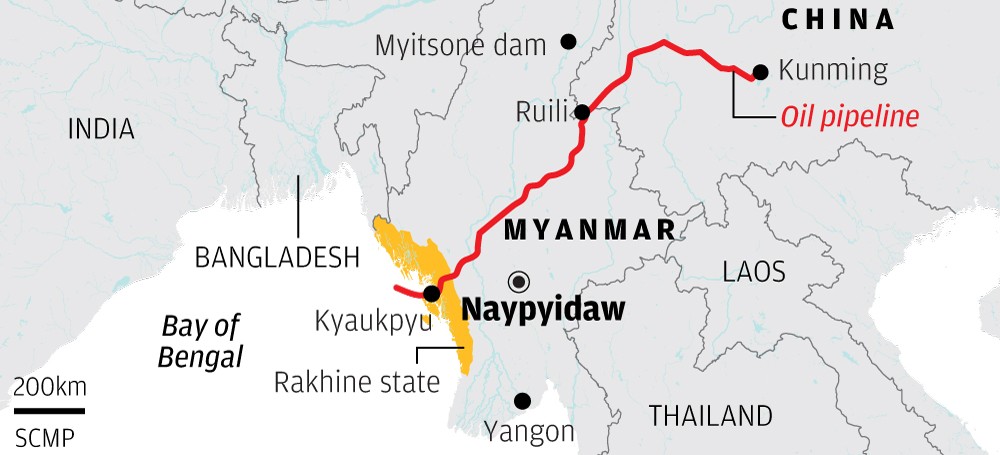
Myanmar’s Kyauk Phyu development in the Rakhine state is an important indicator of how these issues can be addressed. The corridor has evolved as a response to India’s limited participation in the earlier proposed economic corridor linking Bangladesh, China, India and Myanmar.
Advertisement
As a reminder, China, as part of its belt and road programme, wants a West Coast seaport that will ease energy security concerns by allowing a bypassing of the Strait of Malacca. It was to this end that Kyauk Phyu was identified as an important port and economic zone.
Advertisement
Advertisement
Select Voice
Select Speed
1.00x