Dare to fail: why China’s women entrepreneurs are finding greater success
Edward Tse and Josie Tai say the enterprising Chinese women who start a business today tend to be motivated by the pull of greater opportunities rather than just trying to find a livelihood. They tend to start younger, are better educated, and are not afraid to fail
Female entrepreneurship is on the rise in China. In the 2017 Forbes list of the world’s 56 self-made women billionaires, there were 21 Chinese entrepreneurs, accounting for 37.5 per cent of the total.
In 2017, China’s female/male ratio of an index measuring entrepreneurial activity is 0.87, above the global average of 0.7. The Total Early-stage Entrepreneurial Activity index, published by the Global Entrepreneurship Monitor, reflects the percentage of the 18-64 population who are either a nascent entrepreneur or an owner-manager of a new business.
In fact, female entrepreneurship is not new in China. Among the older generations, women who succeeded include Yang Mianmian, Haier’s co-founder and former president who helped turn the company into one of the leading white-goods makers in the world; Sun Yafang, who was chairwoman of Huawei, the world’s leading telecommunications equipment maker, from 1999 to 2018; and Dong Mingzhu, the former chairwoman of Gree Group, the world’s largest household air conditioner maker. Younger women have also made their mark, such as Lucy Peng Lei, a co-founder of the e-commerce giant Alibaba (owner of the South China Morning Post).
Advertisement
Before 1950, women entrepreneurs were almost unheard of in China. The strict gender roles in Chinese culture mean aspiring businesswomen face many challenges.
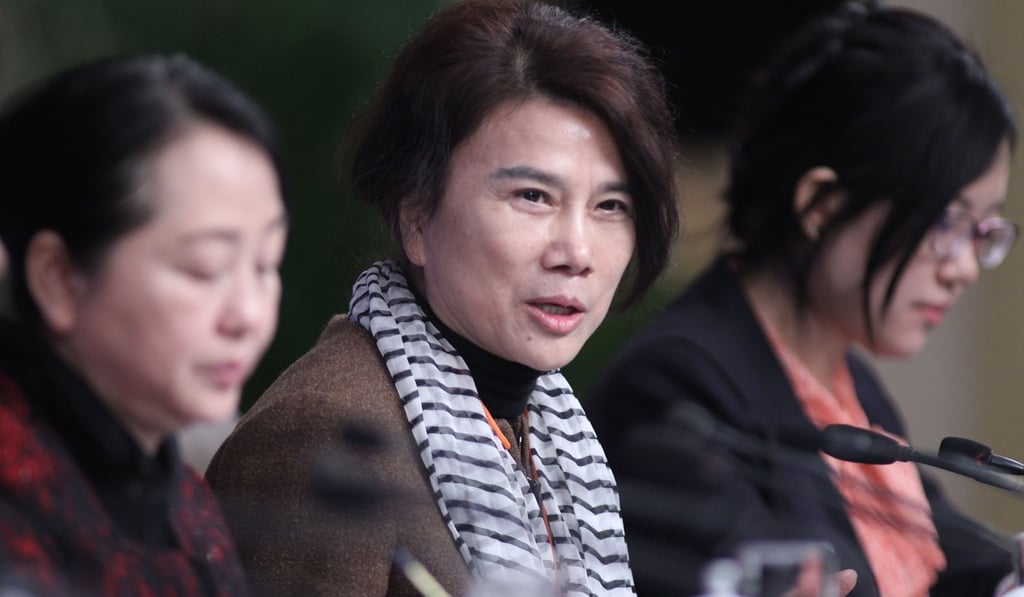
Dong Mingzhu, the chairwoman of Gree Group and a deputy to the 12th National People’s Congress, speaks at a press conference for the NPC session on gender equality in Beijing in March 2015. Dong, who has since stepped down as group chairwoman, is one of China’s best-known businesswomen. Forbes ranked her fourth in its “Asia’s 50 Power Businesswomen” list for 2015. Photo: Simon Song