Advertisement
Why China is unlikely to weaponise the yuan, even as the trade war rages
Richard Harris says the level-headedness of Chinese policymakers has been evident in the past months as the yuan has not excessively devalued despite the US-China trade war
3-MIN READ3-MIN

Currency forecasting is a black art even though the impact that currency has on portfolio investment returns is dominant. It is the canvas on which all investments are painted. It is just as important to get the currency of the investment right as the investment itself. There is never a free lunch in investment.
While Hong Kong investors are somewhat sheltered from currency movements by the US dollar peg, we depend for just about everything else on the value of the yuan. Our food, our water, our very prosperity depends on the Chinese economy. It is a comfort to note that Chinese lever-pullers are possibly the most responsible policymakers of any at the moment.
In the past 18 months, they have been uniquely focused on the control of debt that inflated liquidity and led to the bubble of 2015. Uncontrolled and unregulated lending was reported to be as large as the official banking sector itself. There is now less money flying around, which is slowing the domestic economy – but it is necessary short-term pain for long-term gain.
Advertisement
The authorities have tried to lessen the pain recently by increasing government spending, relaxing monetary policy and reducing taxes and bureaucracy, but they cannot ease it entirely. This is the price of getting the economy back in line. Western democratic governments cannot currently stomach paying the price of an economic slowdown as it typically means getting thrown out in the next election.
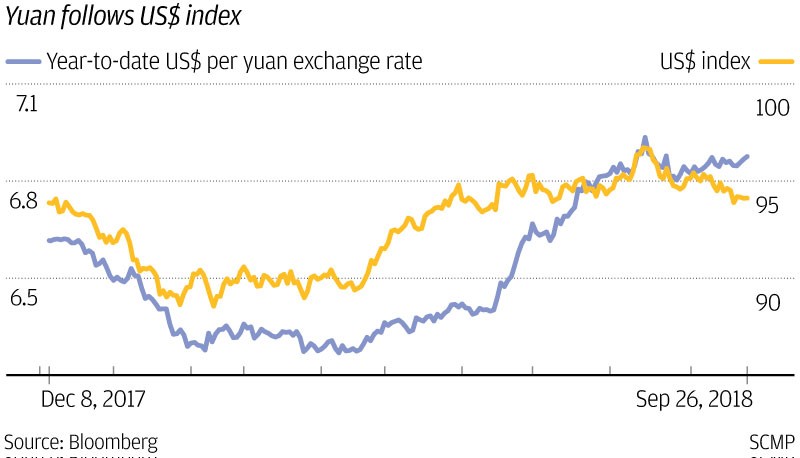
The reduction of liquidity coupled with the separate imposition by the US of tariffs on Chinese imports has intensified the slowdown and driven a severe fall in China’s stock market. Yet this domestic slowdown has not been accompanied by excessive currency weakness. That indicates the yuan is not being used as a weapon against the trade tariffs – and nor is it likely to be.
Advertisement
Advertisement
Select Voice
Select Speed
1.00x