In the technology race to develop AI, the US and China can, and must, work together
- Rodger Sadler and Chuan Shen say the US and China can accomplish more together in the push to grow AI technology
- China can benefit from the expertise of US developers, while the US can leverage the massive volume of Chinese data

Worldwide demand for artificial intelligence technology is poised to increase dramatically. PwC estimates AI will add US$15.7 trillion to global GDP by 2030. The two most robust economies in the world, the United States and China, are leading the charge to develop the technology for the coming AI revolution.
But does it have to be a zero-sum game, where only one country emerges as the winner? In a recent New York Times op-ed, MIT president L. Rafael Reif argued that if the US and China try to double-lock their doors in a competition to develop and own AI technology, then both run the risk of locking themselves into mediocrity.
Far more will be accomplished if both countries work together and leverage each other's strengths.
Currently, China is poised to become an AI powerhouse because it has:
- a clearly-defined national strategy from the highest level of government, which has unlocked a flood of investment capital for AI research, development and implementation. According to a CB Insights report, 48 per cent of global AI investment flowed into Chinese start-ups in 2017, up from only 11 per cent in 2016, while the US lagged behind with 38 per cent;
- access to massive amounts of consumer data – the lifeblood of AI development. As Kai-fu Lee, former head of Google China and founder of Sinovation Ventures, says: “In the age of AI, data is the new oil, and China is going to be the new Saudi Arabia”; and
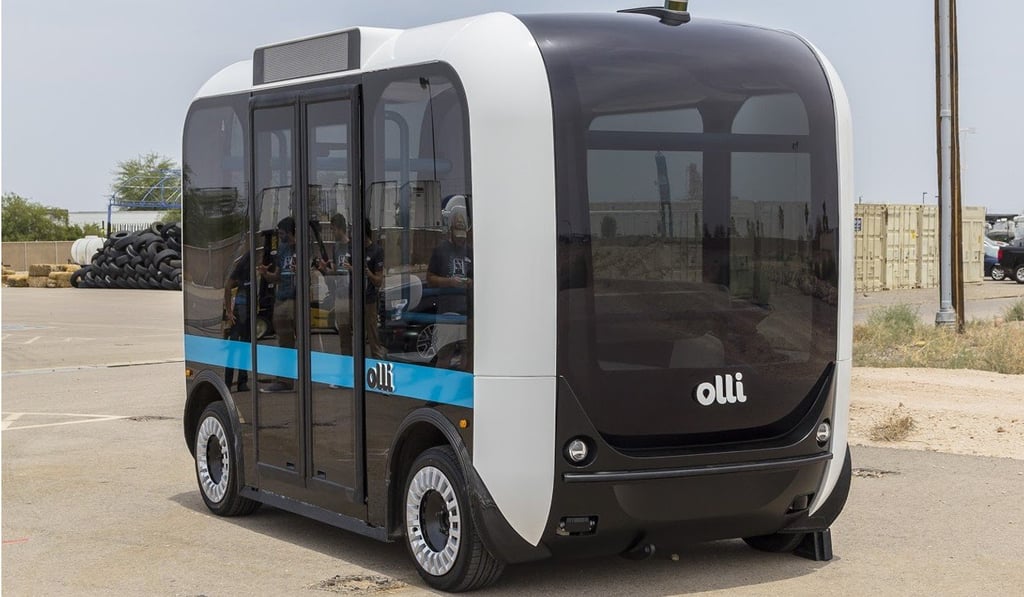
- national and local governments focused on developing and adapting infrastructure (for example, smart roads for smart cars), with the real-world implementation of AI in mind.
On the other hand, the US innovation machine is powerful because it has:
- ready access to the US-developed and -owned hardware needed to run advanced AI algorithms. And by blocking Chinese attempts to acquire US chip companies, the US government is ensuring Chinese developers continue to look to the US for cutting-edge hardware for AI applications;
- the world’s top institutions for AI research and education, including MIT, Carnegie Mellon, Stanford and University of California, Berkeley; and
- incredible diversity in its AI talent pool and its general population. Diversity is critical to AI development. If data sets used to train AI algorithms are limited or biased, or if those creating an AI algorithm do not recognise or account for those limits and biases, the output will be flawed. Thus, being able to tap diverse AI talent from around the world gives the US a tremendous advantage in developing robust AI algorithms for global use. Similarly, the data generated by America’s diverse population is invaluable for training AI algorithms that will be effective around the world.