Advertisement
What do Vietnam, the US-China trade war, Brexit and Lantau reclamation all have in common? They show what happens when leaders need to look tough
- Philip Bowring says that from Iran to Vietnam and now China, US leaders keep making bad decisions rather than looking weak. But the US isn’t alone: Britain’s Brexiteers and Carrie Lam’s artificial island scheme show signs of the same malady
3-MIN READ3-MIN

Forty-three years after the Vietnam war, the history and origins of that tragedy have been retold with the perspective of time by British journalist and historian Max Hastings in Vietnam: An Epic Tragedy, 1945-1975. Although it was the seminal global event of my early years as a journalist, only now have I come to realise how, from 1963, few of those politicians and generals who led the United States ever deeper into that mire really believed they could win.
The fear of being seen, at home and abroad, as weak was ever-present. Short-term goals ruled. Escalation avoided, for the time being, retreating.
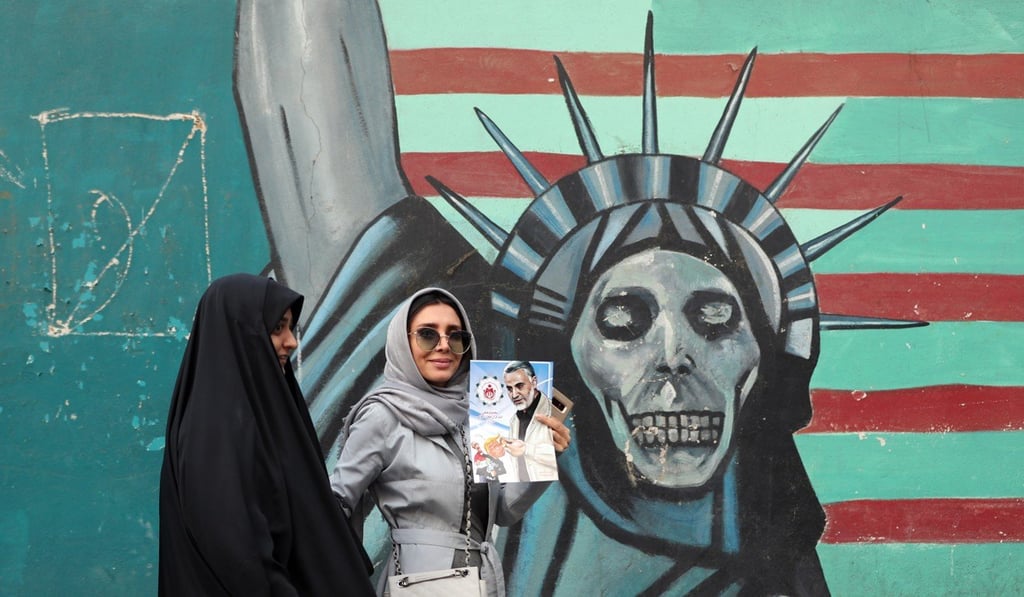
The US’ next refusal to admit reality came after the overthrow of its pet autocrat, the shah of Iran, whose 1953 coup against the government of Mohammad Mossadegh was organised by the CIA. The overthrow eventually led to the 1979 Tehran hostage crisis and desert humiliation, and then to US support of Iraq’s invasion of Iran, a war which enabled the mullahs to tighten their grip on Iran at the expense of secularists.
Advertisement
Despite itself having two wars against Iraq, the US still cannot get over its failure in Iran, hence the latest sanctions retreat from the nuclear accord. This is obviously against US global strategic interests: alienating its European allies and India, and providing opportunities for Russia and China to advance their interests in the region and in the Indian Ocean.
The main beneficiaries of this preference for focusing on old “villains” and not today’s realities are two undeserving allies: Saudi Arabia, global purveyor of medieval, desert Islam and scourge of Shiites; and an Israel under Benjamin Netanyahu dedicated to expansion, colonial settlement and ever-more racist laws, but given diplomatic cover by US President Donald Trump.
Advertisement
Advertisement
Select Voice
Select Speed
1.00x