The price of ‘eternal vigilance’ is boredom
- Both a retiring High Court judge and a dissident scholar have recently cited a statement wrongly attributed to Thomas Jefferson. It certainly sounds grandiose but it’s not clear what they meant

Some statements sound profound but are actually trite. Speakers often quote them to create an appearance of gravitas. For example, there’s that oft-cited remark about “eternal vigilance”, which is usually attributed to Thomas Jefferson, though scholars generally agree he never said or wrote it.
People as diverse as a retiring High Court judge and a dissident scholar in Hong Kong have recently cited it. It certainly sounds grandiose but it’s not clear what they meant. Perhaps they were merely saying it’s better to be awake than asleep.
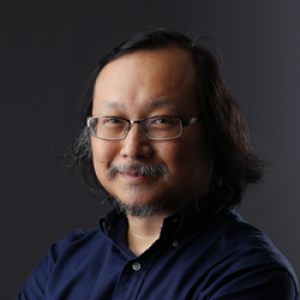
At the end of a month-long trial, Benny Tai Yiu-ting, a University of Hong Kong law lecturer, said: “Only through the introduction of genuine universal suffrage could a door be opened to resolving the deep-seated conflicts in Hong Kong … The price of freedom is indeed eternal vigilance.”
Tai is one of nine defendants charged for their roles in the Occupy protests in 2014 who have all pleaded not guilty.
If it’s meant as a statement of fact, what he said about universal suffrage is probably untrue, or at least highly debatable. Just look at Britain’s Brexit and Donald Trump’s America.
Commenting on the current state of British society undergoing Brexit, a British wit went Churchillian with a twist: “We shall fight each other on the beaches … in the fields and in the streets, we shall fight each other in the hills; we shall never surrender – to common sense or rational thinking.”