
EditorialTrump’s sanctions on Iranian leaders add to confusion on policy
- Allegations and threats have to be set aside to make way for openness to dialogue and engagement
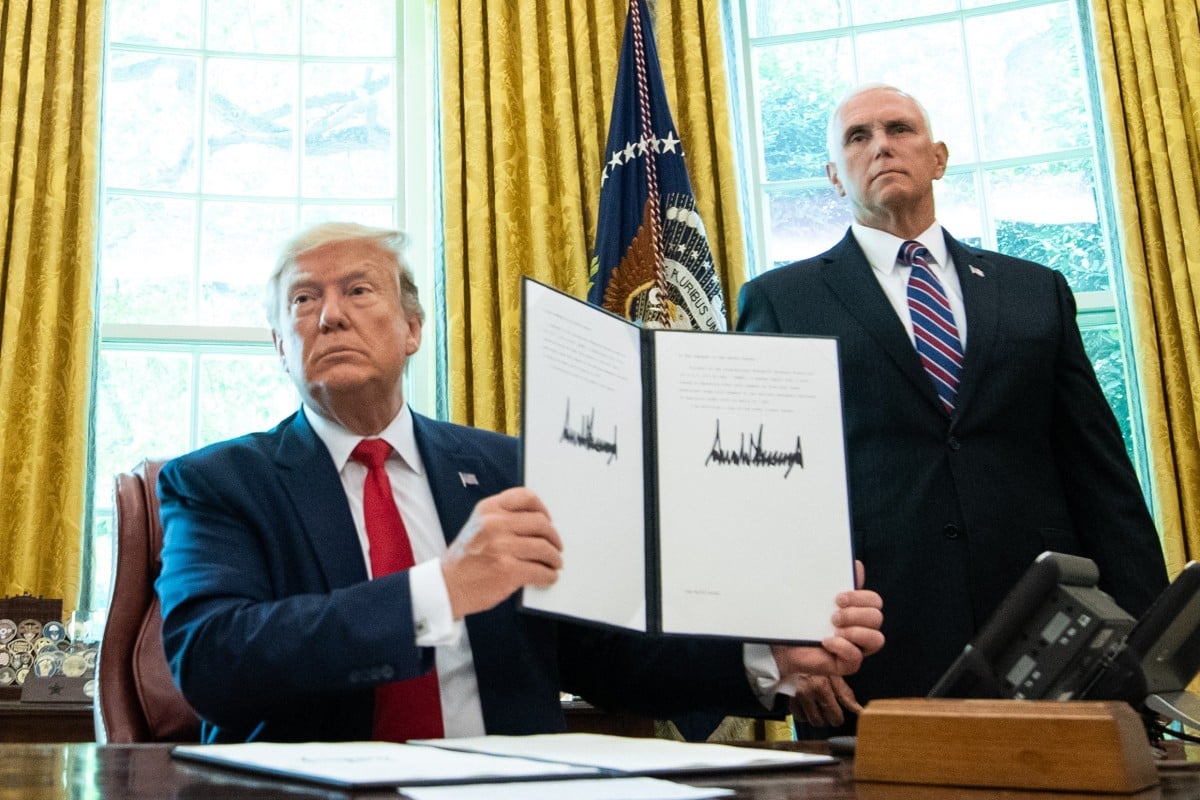
With his latest sanctions against Tehran, US President Donald Trump has added more confusion to concern among friends and adversaries alike over the White House’s Iran policy. Having ordered a military strike in retaliation for the downing by Iran of an American surveillance drone and attacks on oil tankers in which Tehran denied involvement, he called the mission off because of estimates that about 150 Iranians could die. It was a welcome rethink that resonated with previously stated reluctance to drag the United States into more wars. But US Secretary of State Mike Pompeo and National Security Adviser John Bolton opposed the decision to abort, even though the Pentagon supported it. Afterwards Bolton added to the confusion by warning that American prudence should not be mistaken for weakness, and Trump warned that conflict with the US would lead to “obliteration”.
Along with other contradictory remarks it all added to the perception of chaotic decision-making in the White House. Now Trump has announced fresh sanctions, targeted at Iran’s hierarchy from supreme leader Ayatollah Ali Khamenei down and including military chiefs, a provocative step to raise the pressure. Trump said the sanctions would deny Khamenei access to financial resources. “The supreme leader of Iran is the one who ultimately is responsible for the hostile conduct of the regime,” Trump said.
A likely explanation of Trump’s sudden attack of “common sense”, as he called it, over the military strike, is a reluctance to start hostilities with Iran ahead of a the Group of 20 meeting in Osaka, Japan, this Friday and Saturday and expected talks on the sidelines between Trump and President Xi Jinping.
If as Trump said this week the aim was to bring Iran to the negotiating table without preconditions, the latest sanctions do not leave much room for that. If anything, recent events have escalated the risk of conflict. They have certainly done nothing to dispel fears for regional stability sparked by the US withdrawal last year from an international deal with Iran to curb development of nuclear weapons in return for easing sanctions, with which Tehran by all accounts had been compliant. This was followed by the reimposition of penalties and, just last month, the end of a sanctions waiver on oil exports. As a result, Iran’s economy is suffering significantly.
That said, Trump has in the past shown a willingness to set aside the most belligerent rhetoric and negotiate with an enemy, North Korea being an example. The hard line maintained by Pompeo and Bolton shows that a new confrontation at any moment cannot be ruled out. Allegations and threats have to be set aside to make way for openness to dialogue and engagement.