
Advertisement

Opinion | Moving factories from China to Southeast Asia? Watch out for rising costs and strikes

  • Cambodia and Vietnam are two examples of complicated business environments in Southeast Asia where the foreign investor needs to tread with care: rising costs, a less efficient workforce, and stronger labour movements are just a few of the risks

Reading Time:3 minutes
Why you can trust SCMP
A worker in the adapter production line in a plant inside Vietnam-China Economic and Trade Cooperation Park. Photo: Cissy Zhou
With China’s demographic dividends gradually disappearing in recent years, production costs have soared in the world’s second-largest economy. This, and mounting environmental pressures have led many Chinese and foreign multinationals to relocate their factories to Southeast Asia. More importantly, many are looking to offset the business risks from the intensification of the trade war between the United States and China.
That said, it is simplistic to assume the business environment in Southeast Asia is excellent for foreign investors. Recent reports by consulting companies and think tanks have highlighted the trade war’s benefits for Southeast Asia. But these reports are short on the risks of doing business in many of these economies. Many foreign investors continue to encounter difficulties, particularly in Cambodia and Vietnam.

Cambodia’s business environment remains complicated. Earlier this year, following strikes deemed illegal, 1,200 workers were fired from factories supplying brands including H&M and Marks & Spencer.

Advertisement

Labour costs in Cambodia have been rising sharply. Since 1997, the minimum wage has risen US$40 per month to US$182 this year. If employee benefits and various subsidies are included, this rises to about US$210 per month, higher than the minimum wage in Bangladesh, Sri Lanka, India, Myanmar, Pakistan or Laos.

In recent years, worker protests and labour strikes have also become more prevalent. Cambodia’s productivity is only about 60 per cent of China’s, according to industrial analysts, lagging behind both Vietnam and Indonesia, which manages about 80 per cent of Chinese productivity.
Advertisement
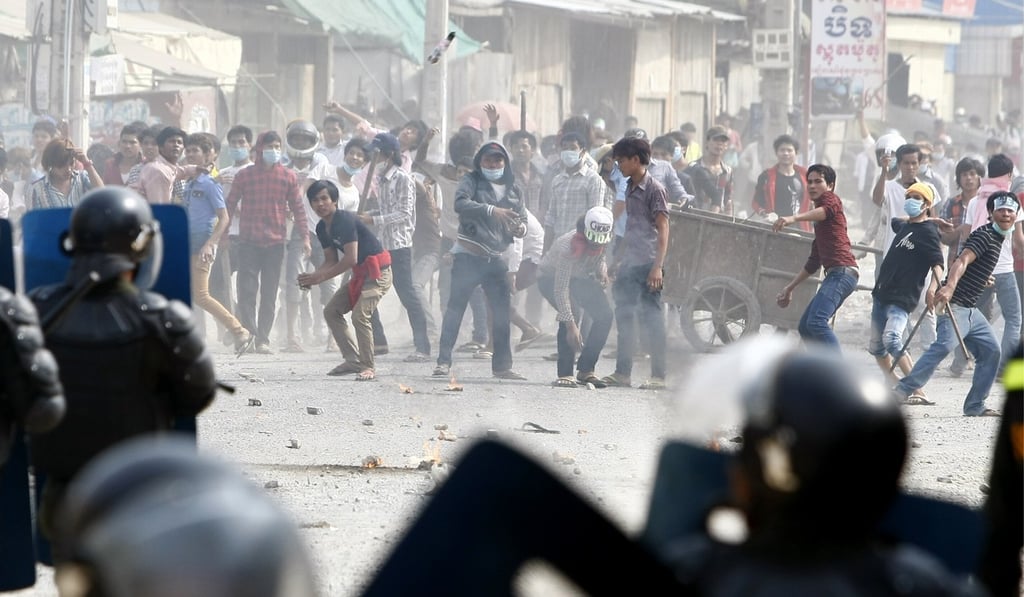
Cambodian garment factory workers on strike in 2014 to demand a better living wage. From police killings of protesters to mass faintings on the factory floor, Cambodia’s manufacturing sector, which makes apparel for major international brands, has come under increased scrutiny. Photo: AP
Advertisement
Select Voice
Choose your listening speed
Get through articles 2x faster
1.25x
250 WPM
Slow
Average
Fast
1.25x