
Advertisement
Legacy of war in Asia
Opinion
Jung-kyu Kim

Eye on Asia | Why a Japan-South Korea trade war would not be a case of ‘both sides are at fault’ – Tokyo must compensate its wartime victims

  • Japan’s claims that it is restricting the export of hi-tech materials to South Korea on ‘national security’ grounds are clearly absurd: Tokyo is trying to avoid paying compensation to victims of wartime atrocities for which it is still liable

Reading Time:3 minutes
Why you can trust SCMP
US Secretary of State Mike Pompeo, centre, gestures to his Japanese counterpart Taro Kono, right, and South Korean counterpart Kang Kyung-wha after a trilateral meeting in Bangkok. International observers warn that the fraying of ties between Seoul and Tokyo will have economic and security implications, and not just for them. Photo: AP
Japan has recently taken steps to regulate the export of hi-tech materials to South Korea. It has justified the moves under the pretext of “national security”, presumably to exploit this exception under World Trade Organisation rules.
However, the moves are widely seen as retaliation for the Korean Supreme Court rulings ordering Japanese companies to compensate victims of forced labour during World War II. Japanese Industry Minister Hiroshige Seko admitted as much when he said the steps were a consequence of Korea failing to resolve the rulings.

In short, Japan has basically admitted that it is carrying out an economic sanction against an ally, under a false pretext designed to skirt WTO rules, because it doesn’t want its companies held liable for wartime crimes. How does the Japanese government justify this?

Advertisement

Tokyo’s argument goes like this: the 1965 treaty between Japan and Korea has “settled completely and finally” all colonial-era claims. In return, Japan provided Korea with US$800 million in grants and loans. Individual claims, such as compensation for victims of forced labour, should therefore be handled by the Korean government, which took the money.

When Japanese Prime Minister Shinzo Abe exhorted Koreans to “keep the promises between nations”, this was the viewpoint he had in mind.
Advertisement
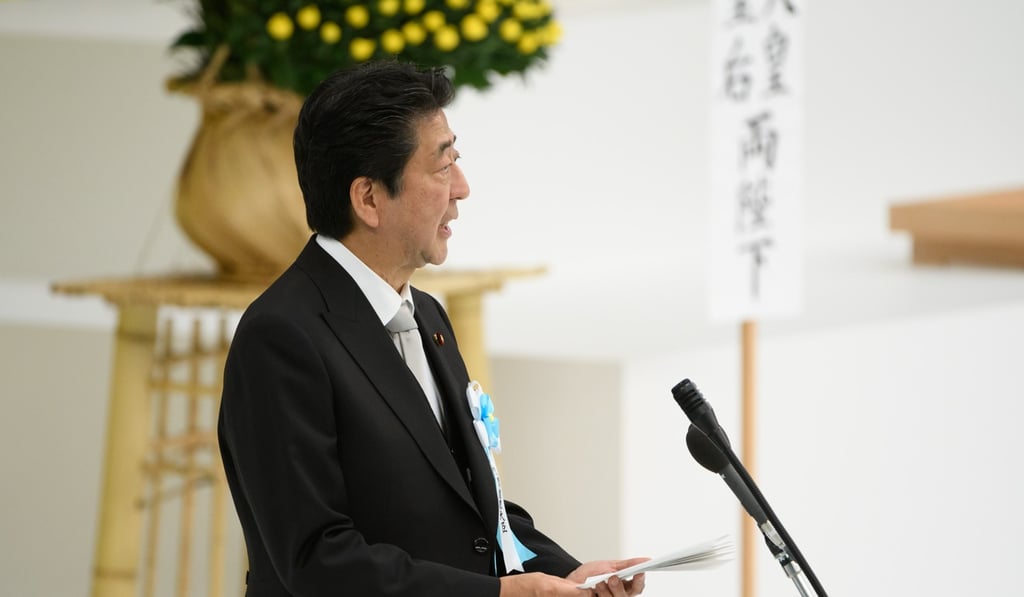
Japan's Prime Minister Shinzo Abe marked the anniversary of World War II’s end on August 15 by sending an offering to the Yasukuni Shrine, which honours Japanese war dead – including World War II-era war criminals – one of many actions that has infuriated Japan’s neighbours. Photo: Bloomberg
Advertisement
Select Voice
Choose your listening speed
Get through articles 2x faster
1.25x
250 WPM
Slow
Average
Fast
1.25x