
Advertisement
Executive Council of Hong Kong
Opinion
Alice Wu

OpinionPolitical reform in Hong Kong could begin with a revamp of the ‘peripheral’ Executive Council

  • An Exco member’s revelation that the chief executive turned down their offer to resign en masse, on the grounds that the council merely gives advice, raises questions about its function, membership and whether meetings need to be confidential

3-MIN READ3-MIN
Non-official convenor of the Executive Council Bernard Chan is followed by other Exco members as they meet the media at the government’s headquarters in Tamar, Admiralty, on July 22, after a night of violence around Hong Kong on July 21. Photo: Nora Tam
During the last days of 2019, lawmaker and Executive Council member Regina Ip Lau Suk-yee dropped a political bomb that, unfortunately, went pretty much unnoticed. Ip revealed that members of the Executive Council, the chief executive’s de facto cabinet, had considered resigning en masse amid the ongoing anti-government protests.

Here’s how Chief Executive Carrie Lam Cheng Yuet-ngor responded to the extraordinary piece of political news, according to Ip: she rejected the idea because Exco was only on the “periphery, merely giving advice”. 

This is a shocking revelation about the nature of the Exco. It is interesting to learn that these advisers sit only on the sidelines, almost like a detached group of spectators, albeit with front-row seats. They meet almost weekly, but they play no part in, well, anything – at least, that’s how the chief executive sees it.

Advertisement

This naturally leads to the question: what role does Exco play in the whole business of “Hong Kong people governing Hong Kong”? Do they just meet to chat about the weather?

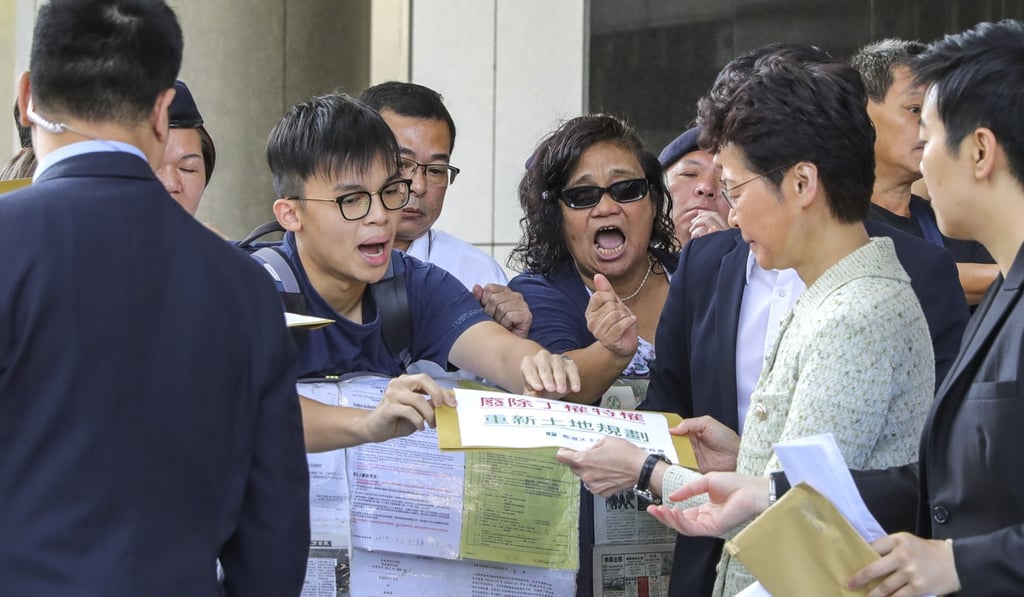
Their Tuesday mid-morning meetings have been almost the only opportunity for Hongkongers to see the chief executive in person since June. En route to chairing the Exco meeting, Lam briefly meets the press, gets grilled on the same issues and has the opportunity to mouth off the same non-answers before running off to see her cabinet members.
Advertisement
A member of the Justice and Peace Commission of the Hong Kong Catholic Diocese hands a letter about housing policy to Hong Kong Chief Executive Carrie Lam as she arrives for an Executive Council meeting at the government headquarters on October 15, 2019. Since the protests began, Lam’s attendance at meetings with her cabinet is one of the only opportunities for members of the public to see her in person. Photo: May Tse
Advertisement
Select Voice
Select Speed
1.00x