
Advertisement
Coronavirus pandemic: All stories
Opinion
Yeoh Eng-kiong

Opinion | Hong Kong’s management of the coronavirus epidemic is an evolving science, even after the lessons of Sars

  • To be prepared for an outbreak is important but that provides only a framework. Any plan needs to be constantly informed by the emerging science in an epidemic, and complemented by real-time surveillance to gather effective intelligence in a fast-changing situation
Reading Time:4 minutes
Why you can trust SCMP
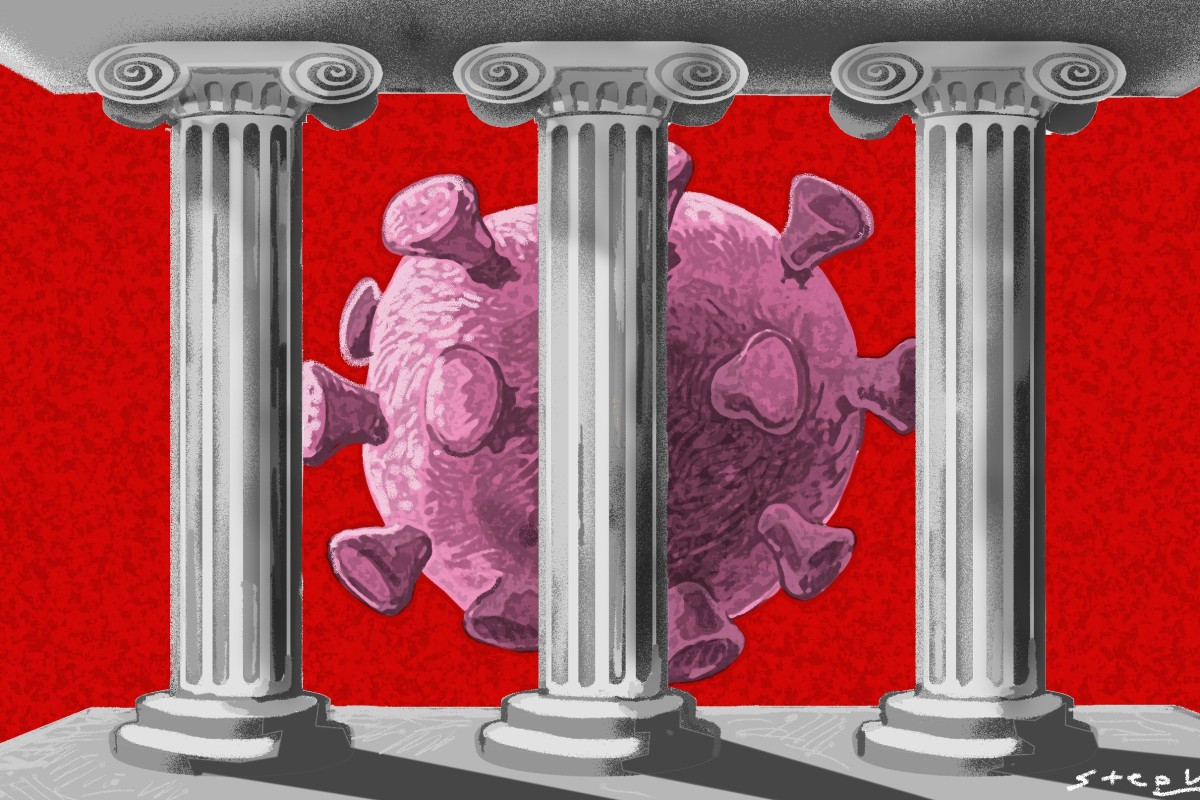
Illustration: Craig Stephens

On March 10, 2003, the severe acute respiratory syndrome unceremoniously announced its foothold in Hong Kong in an outbreak of the infection at the Prince of Wales Hospital, eventually infecting 239 health care professionals, medical students, patients and visitors.

It exposed Hong Kong’s vulnerability to new and emerging infectious diseases, in its geopolitical position and as an open economy with free flows of people, goods and services across its borders. Also evident were our public health inadequacies in surveillance for early detection and in rapid responses to threats.

In the aftermath of the epidemic, a government-commissioned Sars expert committee made 46 recommendations to enhance Hong Kong’s public health capabilities. Supplies, facilities and staff training for infection control were enhanced, isolation rooms and wards were upgraded and increased in 14 acute hospitals, and public health resources were significantly increased with the creation of the Centre for Health Protection, whose mission is “to achieve effective prevention and control of diseases”.
Advertisement
In the Covid-19 epidemic, enhanced preparedness and planning for the outbreak is necessary but insufficient in enabling the early detection of a public health threat and the corresponding rapid response to contain, control and eradicate the intrusion. Each outbreak is different. The infectious agent is different in its virulence, and its transmissibility differs with myriad manifestations. The context of the latest outbreak is unique and the sociopolitical environment dissimilar from in 2003.

Even the most robust preparedness plans, however regularly updated, can only provide a framework when there is insufficient knowledge and understanding of the nature of the agent and the range of its effects on the host. The application of strategies and measures to control the outbreak has to be assessed in real time as science unravels the mystery.

Advertisement
Advertisement
Select Voice
Choose your listening speed
Get through articles 2x faster
1.25x
250 WPM
Slow
Average
Fast
1.25x