Advertisement
Opinion
Is having two bosses really the way forward for the West Kowloon Cultural District?
- It might be unrealistic to expect to find in one CEO all the skill sets required to run a complicated project like the cultural district. In theory, a chief artistic officer would help strengthen the hub’s cultural brand
3-MIN READ3-MIN

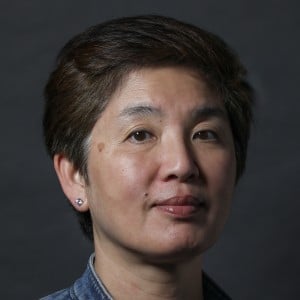
Enid Tsui is the Post's Arts Editor.
After the Xiqu Centre, will chief artistic officer (CAO) become the next nudge-nudge-wink-wink name adopted by the West Kowloon Cultural District?
The name of the Chinese opera theatre sounds like “private parts” in Cantonese, while cao, in Mandarin, is often used in less polite circles as a short way of saying “go forth and multiply”.
Jokes aside, the idea of a CAO is being floated now that the very serious business of finding a replacement for Duncan Pescod, the ousted chief executive of the West Kowloon Cultural District Authority (WKCDA), is under way.
Advertisement
At least two authority board members have told me that there is support for the idea of splitting the CEO job into two. One, a chief in charge of sorting out the dastardly-difficult construction projects and commercial tenders. The other, a chief in charge of the content behind the concept of the West Kowloon Cultural District: a CAO overseeing all the performing arts venues; M+, the museum of visual culture; and the Hong Kong Palace Museum, with its focus on the treasures from Beijing’s Forbidden City.
The reason behind this thinking is that it is simply unrealistic to expect to find in one person all the skill sets required for such a complicated and troubled project. They have tried CEOs with an arts background. For example, Graham Sheffield, the CEO appointed in 2010, was the former artistic director of the Barbican Centre in Britain.
03:34
How Forbidden City treasures survived modern China’s bloody beginning
He stayed for five months. Pescod, a career civil servant and former director of housing in Hong Kong, was seen as a safe pair of hands when he took over in 2015. Even though he didn’t know about the arts, it was felt that someone with his background was best suited for the urgent business of actually getting the district built.
Advertisement
Select Voice
Select Speed
1.00x