
A stronger China has no reason to seek a sphere of influence even as US power wanes
- China has no interest in replacing the US as the world’s dominant military and political power. In East Asia, the challenge is how Beijing and Washington, with their overlapping influence, can coexist
- The US suspects China is trying to drive it out of the region and has stepped up its provocations over Taiwan and the South China Sea, which risk testing the PLA’s patience
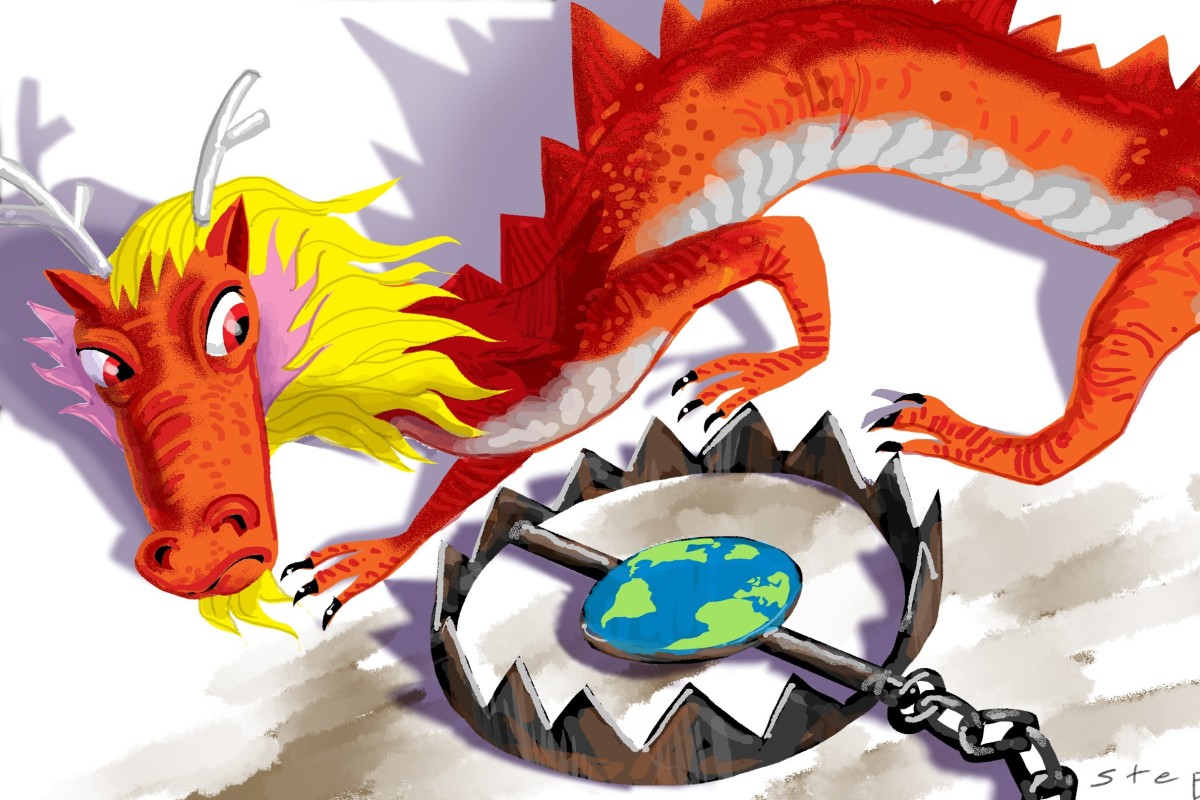
Does a stronger China need a sphere of influence? I asked myself this question when I came across the article, “The New Spheres of Influence”, in Foreign Affairs by Harvard professor Graham Allison. Allison argues that, after the Cold War, the entire world became a de facto American sphere. But now the unipolarity is over. The United States must share its spheres of influence with other great powers such as China and Russia.
I imagine for a moment where a Chinese “sphere of influence” might be. Not in Central Asia, where Russia’s influence is dominant. Not in South Asia, where India’s influence is paramount. Only East Asia looks likely, given its historical and cultural ties with China.
But, if a sphere of influence means a state has a level of exclusive control in cultural, economic, military or political matters, to which other states show deference, East Asia can hardly be described as China’s sphere of influence.
North Korea has developed nuclear weapons despite China’s disapproval. Japan, South Korea and Thailand are American allies. Some member countries of the Association of Southeast Asian Nations, such as Vietnam, the Philippines, Malaysia and Brunei, have territorial disputes with China in the South China Sea.
With Chinese and Russian as its official languages, the Shanghai Cooperation Organisation (SCO), which has no Western members, might look like a joint sphere of influence for China and Russia. But it has proven more inclusive than anticipated. Turkey, a Nato member, is a dialogue partner of the SCO. President Recep Tayyip Erdogan had even asked to join the organisation as a full member.
India and Pakistan became member states in 2017. The inclusion of two long-time arch-rivals could bring problems, but their membership also increases the influence of the organisation, which straddles the Eurasia continent, and strengthens efforts to tackle the so-called “three evils” of terrorism, separatism and extremism that have plagued the region.