-
Advertisement
World Economic Forum (WEF) in Davos
Opinion
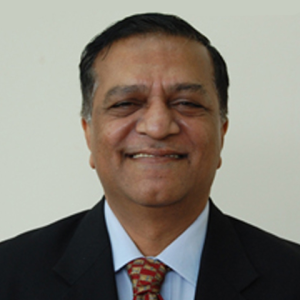
Tilak K. Doshi
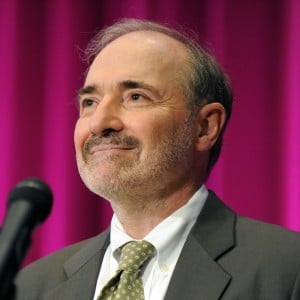
Peter Coclanis
Tilak K. DoshiandPeter Coclanis

The irony of sages of the West offering stakeholder capitalism to Asia

  • Given Asian corporate governance issues, the West’s stakeholder campaign merely offers gleeful Asian tycoons new opportunities to financially underperform
  • Meanwhile, CEOs who support the campaign have been found to furlough staff and cut benefits amid the Covid-19 crisis while paying dividends to shareholders

Reading Time:3 minutes
Why you can trust SCMP
Klaus Schwab listens to a press conference in Cologny, near Geneva, last year. The World Economic Forum founder, and proponent of a “Great Reset”, says Asia may be “philosophically more prepared” for stakeholder capitalism. Photo: EPA-EFE

Last month marked 50 years since Milton Friedman published in The New York Times Magazine his epochal essay “The social responsibility of business is to increase its profits” – making clear his idea that “the business of business is business”. But there is little cause to celebrate his defence of shareholder capitalism.

In a repudiation, the influential US Business Roundtable adopted in August last year a new “statement on the purpose of a corporation”, signed by 181 CEOs “who commit to lead their companies for the benefit of all stakeholders – customers, employees, suppliers, communities and shareholders”.
The stakeholder campaign, with its advocacy for sustainable development, corporate social responsibility (CSR) and environment, social and governance (ESG) guidelines has been long in the making. The 1973 Davos manifesto proclaimed that management must also serve employees and societies, as a “trustee of the material universe for future generations”. More recently, World Economic Forum founder Klaus Schwab called for a “Great Reset” of capitalism as countries struggle to recover from pandemic lockdowns.
Advertisement
In January this year, the forum made “stakeholder capitalism” the theme of its annual Davos meeting, discussing it with nearly 3,000 global leaders, including 53 heads of state. In April, it released its “stakeholder principles in the Covid era”. In September, the forum’s International Business Council published a white paper titled “Measuring stakeholder capitalism: Towards common metrics and consistent reporting of sustainable value creation”, with metrics in four categories: corporate governance, planet, people and prosperity.
Primatologist Jane Goodall, a UN Messenger of Peace, speaks at the World Economic Forum in Davos, Switzerland on January 22, at a session dedicated to finding solutions to achieving sustainable development. Photot: AFP
Advertisement

Having seemingly won the battle in Western corporate boardrooms (western Europe’s “social-democratic” corporations have long had management boards which include powerful trade unions), the idea of stakeholder capitalism has now been brought to the East.

Schwab said in a recent Nikkei Asian Review interview that “Asia may be philosophically more prepared for the stakeholder concept than the West … Asia puts emphasis on collectivity, while the West is very much influenced by individual freedom”. Asian companies, like their Western counterparts, must show they are “trustworthy”, that they do not merely maximise profit but “also really care about people, staff, suppliers and customers”, he added.

Advertisement
Select Voice
Choose your listening speed
Get through articles 2x faster
1.25x
250 WPM
Slow
Average
Fast
1.25x