The Chinese model against Covid-19: a total war of the people, for the people, by the people
- In an intriguing explanation, prominent New Left intellectual Wang Hui argues the Chinese communist leadership has successfully modelled its antivirus campaign on the Leninist-Maoist models of total war and people’s war by mobilising the entire populace

When the Covid-19 virus first broke out in Wuhan, many Western commentators blamed it on the totalitarian nature of the Chinese system. Cue The Wall Street Journal’s infamous op-ed, “China is the sick man of Asia”. After the pandemic was contained in China, the same people again attributed the relative success to its totalitarian system, not replicable in the West. Talk about having a one-track mind!
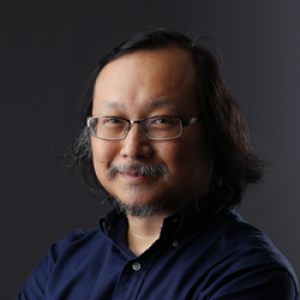
Wang Hui, an intellectual leader of the so-called New Left movement, offers an interesting alternative explanation. To me, it’s as plausible as the Western explanations, if not more so. And it is indeed how the communist leadership saw itself as having successfully achieved. At the very least, it is worth considering for foreigners.
Wang, by the way, is quite well-known among China specialists in the West. Harvard University Press is scheduled to publish an English edition of his multivolume The Rise of Modern Chinese Thought.
To cut a long story short, he argued that Beijing utilised the old Maoist-Leninist models of the people’s war and total war, to mobilise the entire nation – horizontally across the medical and scientific professions, and up and down the ranks from the top Chinese leadership to humblest local neighbourhood units. Everything was put on hold, even the all-important economy, while the nation’s resources were devoted to a single task.
Western pundits are right in this regard; it’s virtually impossible for a contemporary Western democracy to mobilise an entire population that way. However, such a mobilisation doesn’t necessarily depend on dictatorship, authoritarianism or totalitarianism. Such extreme forms of political control usually produce passive citizens unwilling to take responsibility or ownership of tasks assigned to them by the state.
But a high-minded or high-spirited commitment to make personal sacrifices was characteristic of millions of ordinary Chinese who were mobilised against the pandemic in many provinces. This is a characteristic of the people’s war such as the Long March and the subsequent civil war.
Wang’s thoughts on the coronavirus were contained in his essay marking the 150th anniversary of Lenin’s birth in April. They were buried deep into his long essay and weren’t even the main subject of his discourse.
A high-minded or high-spirited commitment to make personal sacrifices was characteristic of millions of ordinary Chinese who were mobilised against the pandemic in many provinces