
Advertisement
5050
Opinion
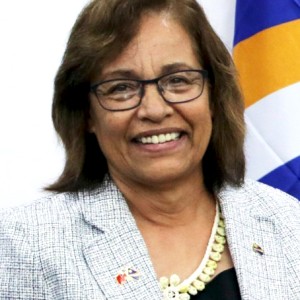
Hilda Heine
Thom Woodroofe
Hilda HeineandThom Woodroofe

Australia, China and other aid donors must realise there’s a better way to help the Pacific

  • Medical supplies have been deployed to islands with no Covid-19 outbreaks, while Australia has withdrawn from the Green Climate Fund. Donor-driven approaches rarely deliver what a recipient needs when geopolitics is driving the agenda

Reading Time:3 minutes
Why you can trust SCMP
Australia’s Prime Minister Scott Morrison (fifth from right) poses for a group photo with other leaders on the sidelines of the Pacific Islands Forum in Tuvalu on August 15, 2019. Photo: AFP/Australian Prime Minister’s Office
Covid-19 has only catalysed the growing geopolitical interest in the Pacific Islands. Donors have been tripping over each other to prepare for an outbreak of the virus. But, at the same time, this has only exacerbated fundamental cleavages in the delivery of aid to the region.
The Pacific has always had a messy web of donor footprints. Australia and New Zealand have been a constant presence. Alongside this, there is a split between the islands that recognise China versus those that recognise Taiwan.

On top of this, colonial relationships and ongoing Compacts of Free Association agreements mean that the support of some big powers looms large in parts of the region, while being entirely absent in others. And more recently, new players such as the European Union have also stepped into the ring.

Advertisement

The fact that the Pacific’s development indicators continue to rank well behind those of Sub-Saharan Africa has helped it avoid the intense politicisation of aid we have seen elsewhere.

But if current trends continue, the Pacific is on track for a collision between its fundamental development needs and the rapidly evolving state of its geopolitical relationships. In just the past few years alone, China has overtaken the United States to become the third-largest donor in the region.

03:29

RCEP: 15 Asia-Pacific countries sign world’s largest free-trade deal

RCEP: 15 Asia-Pacific countries sign world’s largest free-trade deal
The great risk in all this is that whatever the Pacific needs, it is unlikely to actually receive. Already, in recent months, we have seen vast amounts of medical supplies deployed to countries with no outbreaks of Covid-19 at all, while other parts of the region have been left with nothing. Purely donor-driven approaches rarely deliver what a recipient needs, especially when it is geopolitics – not development – driving the agenda.
Advertisement
Select Voice
Choose your listening speed
Get through articles 2x faster
1.25x
250 WPM
Slow
Average
Fast
1.25x