-
Advertisement
Facebook
Opinion
Marcelo Rech

Opinion | Facebook’s dispute with Australia highlights the danger of news deserts

  • Facebook’s reaction to new legislation indicates it is focused entirely on turning in huge profits, regardless of the cost to society
  • Limiting access to journalism only serves to cover up the truth and provide a cover for disinformation

Reading Time:4 minutes
Why you can trust SCMP
6
Facebook and Australia were locked in a stand-off over proposed legislation that challenged Facebook and Google’s dominance in the news content market. Photo: AAP Image
The arm-wrestling in Australia, with Facebook and big tech taking on the government and much of civil society, crystallised a question of global concern: what is the purpose of a company that is based on the sharing of content, which it neither pays for nor takes responsibility for, despite earning some US$86 billion in 2020? 

Although only a decade-and-a-half old, Facebook already seems out of step with new environmental, social and governance (ESG) standards that the world demands of global companies. Instead, it seems focused entirely on turning in huge profits, regardless of the cost to the democracies and societies it claims to serve.

Since its foundation, Facebook’s business model has been similar to that of a media company – it raises its mountain of cash by selling advertisements to people who view its content. Newspapers and magazines discovered a similar model more than three centuries ago. Facebook, however, took this business model to an extreme. It receives billions of dollars from advertisers, convincing people to provide their data and expose their habits, without paying a penny for the content received.
Advertisement

 The dispute in Australia presented itself as a financial controversy. But in essence, we are deciding whether we and future generations will live in democracies in which differences are treated with respect, enabling the search for a common purpose that allows societies to function harmoniously.

Since the beginning of its dispute with the tech platforms, the Australian government has identified that there is much more at stake than the remuneration due to publishers for the copyright on the information they produce. Australia points out ways to maintain independent journalism and to extend to digital giants the regulations, as well as legal and moral obligations, that should apply to all those involved in the production and distribution of content.
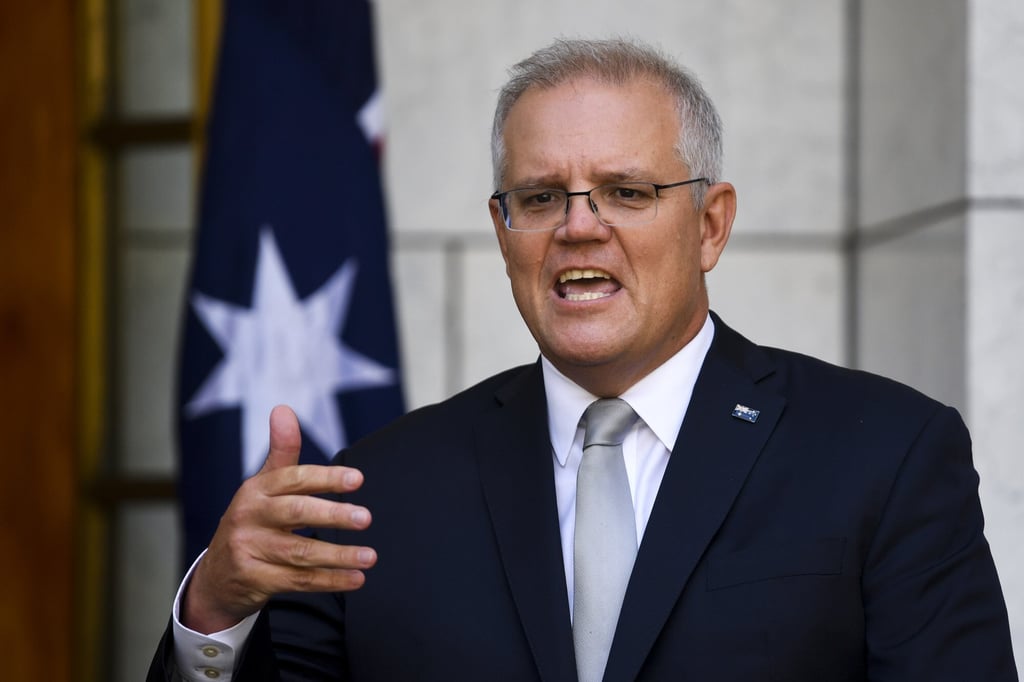
Australian Prime Minister Scott Morrison speaks to the media during a press conference at Parliament House in Canberra on February 23. Morrison slammed Facebook’s “actions to unfriend Australia” after the social media giant disabled a raft of pages in the country. Photo: AAP
What is being argued in Australia is that the digital giants must take responsibility for the disinformation and hate speech that are side effects of their business operations and take steps to reward those who work hard to clean up this ecosystem. They should do this voluntarily, as responsible business operations. In the absence of this, the state and its regulatory bodies are justified in stepping in.
Advertisement
Select Voice
Select Speed
1.00x