
Suga should try to heal US rift with China not widen it
- The Japanese prime minister and his government have to craft policies that are centred on Tokyo’s best interests, with an eye on preventing disputes between the two leading powers from escalating

Japan and the United States have close relations, for historic and strategic reasons. But that should not mean Japanese being subservient to American policy in Asia. The rivalry between Washington and Beijing can too easily drag in allies and that is not beneficial given the importance of Chinese trade and investment.
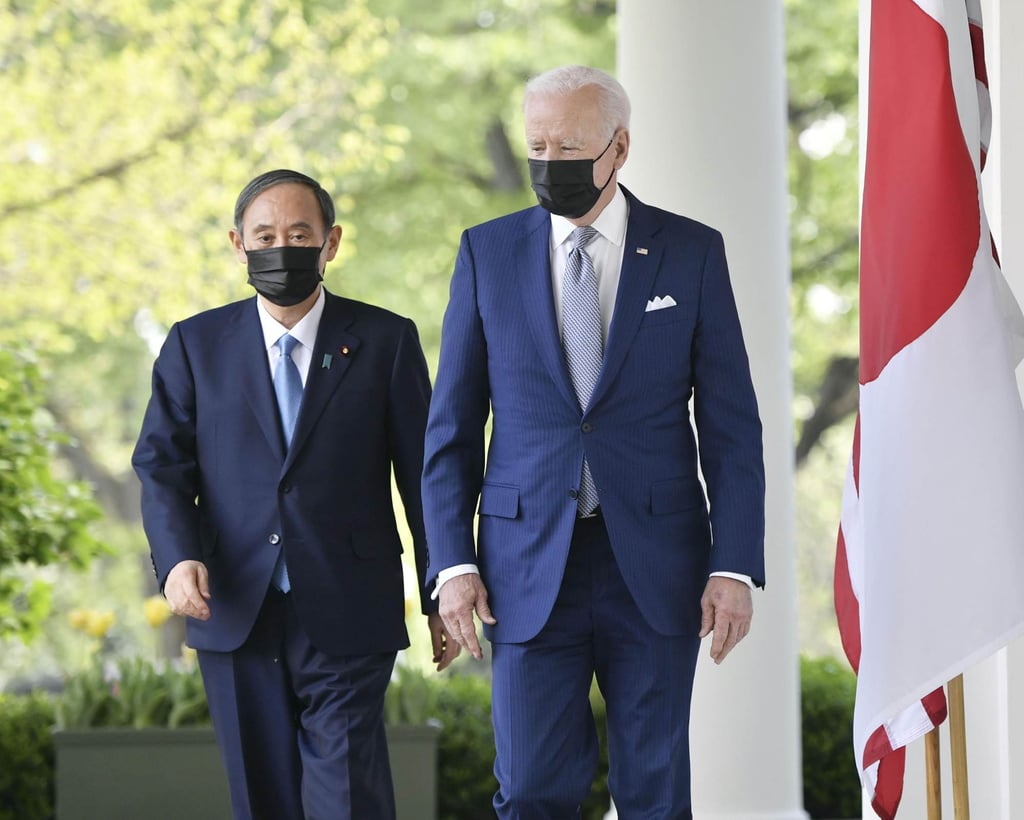
Prime Minister Yoshihide Suga and his government have to craft policies that are centred on Tokyo’s best interests, with an eye on preventing disputes between the two leading powers from escalating.
The long-standing security alliance between Japan and the US is problematic for China. Suga is also well aware of the sensitivity of his country’s brutal imperial past to Chinese and Koreans. Yet his actions in recent weeks have revealed he is still learning how to pragmatically balance what he says and does.
The ceremonial offering left in his name at the Yasukuni Shrine to the country’s war dead last Wednesday predictably angered Beijing and Seoul, even though he took care not to visit the shrine to place it himself.
The joint statement issued after the talks showed that China had been the focus of discussions; it said they opposed “any unilateral attempts to change the status quo in the East China Sea” and voiced “objections to China’s unlawful maritime claims in the South China Sea”.
But it was mention of Taiwan that especially irked Beijing, the reference to “the importance of peace and stability across the Taiwan Strait” being the first time Japan and the US had signed an agreement referring specifically to the island since Tokyo and Beijing normalised diplomatic relations in 1972.