Advertisement

Opinion
Why India’s maritime interests are closer to China than the US
- Like India, China does not accept arbitration on all disputes and is concerned with foreign military activities in its EEZ
- Expediency might sell in the short term for India, but it seldom pays off in the long run and, worse still, it might backfire
4-MIN READ4-MIN
11

Senior Colonel Zhou Bo (ret) is a senior fellow of the Centre for International Security and Strategy at Tsinghua University and a China Forum expert.
India was surprised when the USS John Paul Jones, a 9,000-tonne guided missile destroyer, asserted navigational rights some 130 nautical miles west of the Lakshadweep Islands on April 7, inside India’s exclusive economic zone (EEZ), without requesting prior consent.
Taken aback by the suddenness of the operation, India’s Ministry of External Affairs made a mild protest, saying the operation was unauthorised. It also said its concerns had been conveyed to Washington “through diplomatic channels”.
If India had a choice – that is, if the US Navy made no mention of it – New Delhi would probably have pretended nothing had happened. However, the fact the incident took place less than a month after the first Quad summit and during US presidential climate envoy John Kerry’s visit to New Delhi was too much to ignore.
Advertisement
India and the United States have been part of the chorus chanting about the “free and open Indo-Pacific” in recent years, but they are not birds of a feather flocking together. The decision to challenge India’s EEZ suggests that Washington does not consider millions of square kilometres of water in the Indian Ocean “free and open”.
Otto von Bismarck is famously reported to have said, “Laws are like sausages, it is better not to see them being made.” The UN Convention on the Law of the Sea (Unclos) is probably the longest sausage ever made. It was negotiated for nine years, and understandably compromises were made and ambiguities that could be flexibly interpreted were found.
06:24
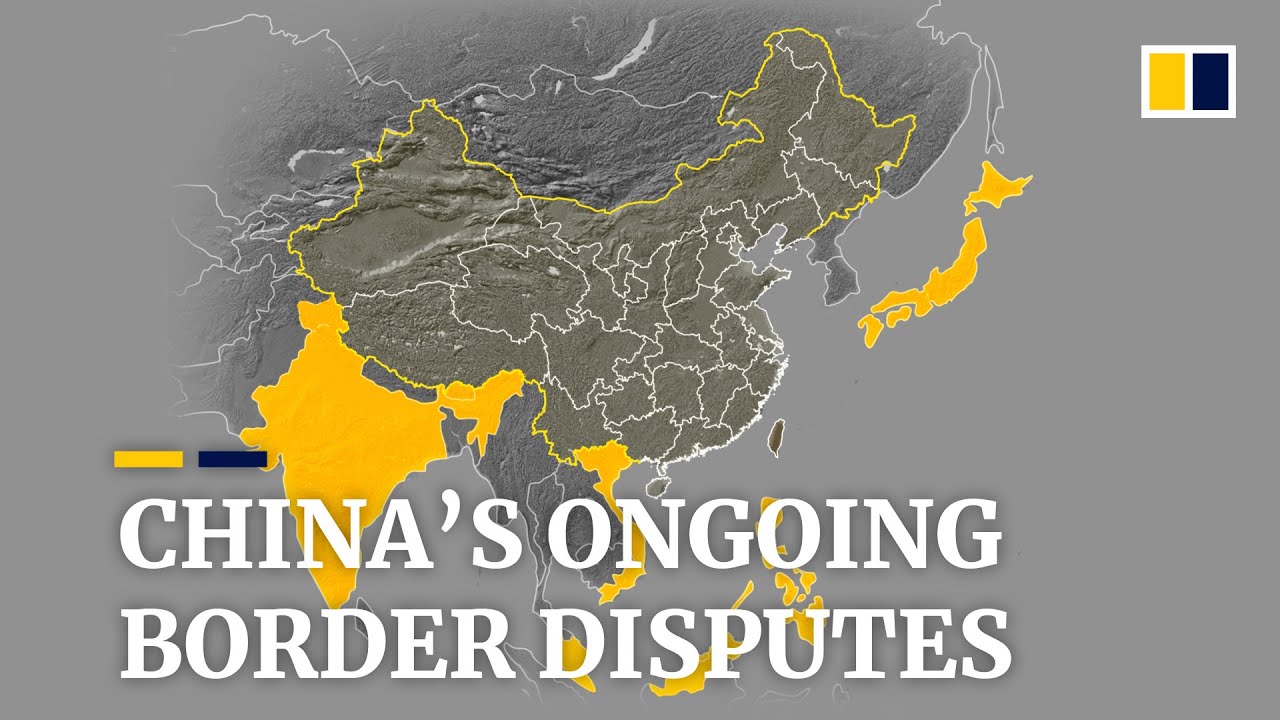
Explained: the history of China’s territorial disputes
Explained: the history of China’s territorial disputes
Almost four decades have passed since the convention was adopted in 1982. The US still has not ratified the convention, yet it behaves as if it is the guardian of maritime law. From October 1, 2019 to September 30, 2020, US forces operationally challenged “28 different excessive maritime claims made by 19 different claimants throughout the world”, according to the Pentagon.
Advertisement
Select Voice
Select Speed
1.00x