
A possible new branch in human family tree
- Chinese researchers will have much to contribute as palaeoanthropologists study the ‘Dragon Man’, who may have predated Neanderthals

The evolutionary history of humans has just become more complicated, thanks to a new analysis in China and an excavation in Israel. Either we have just discovered new species of our ancestors or we have unearthed fossils of a known species of which we have had little physical evidence so far.
Scientists can’t agree among themselves yet, but either way, their discoveries are likely to mark a turning point in our understanding of where we came from.
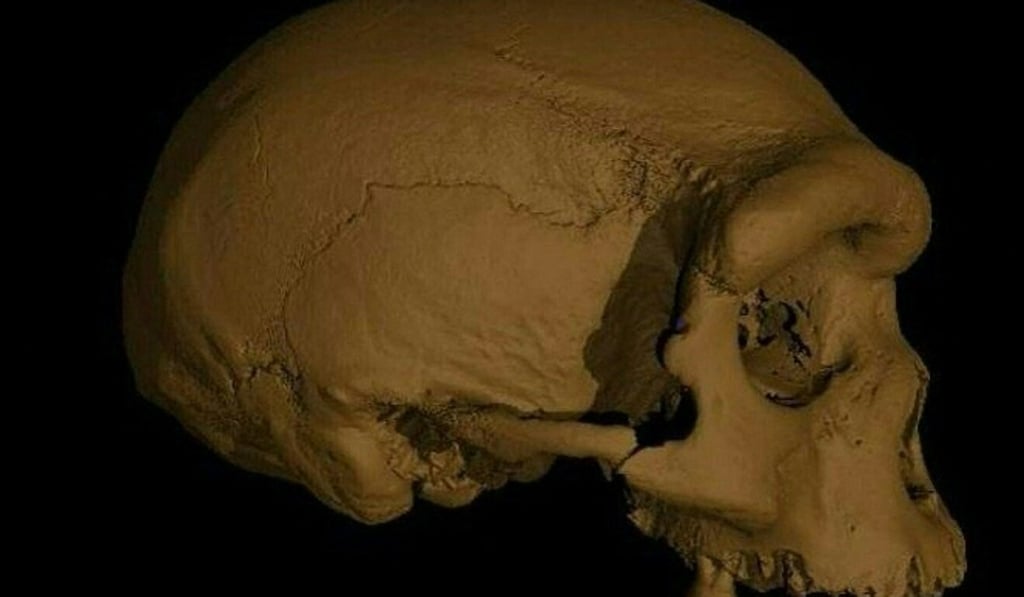
A new assessment by a team of Chinese scientists of a Middle Pleistocene hominin skull, which dates back to about 140,000 years ago, has been christened the Dragon Man, with the technical new species name Homo longi. First discovered by a labourer in 1933 in Heilongjiang province – (Longjiang translates to Dragon River, hence the name) – it was recently donated to state researchers by the family.
According to the Chinese team, the skull’s similarity to some early Homo sapiens fossils means Homo longi may be an even closer relative to modern humans than the Neanderthals.
Others have argued such Middle Pleistocene Homo skulls might belong to those of early Neanderthals who marched from Europe through the Middle East to China and Siberia, and evolved to become the Denisovans. There have been few remains unearthed.