Advertisement

Opinion
How the war in Ukraine is drawing the US and Europe closer – against China
- Russian revanchism has sharpened Western concerns in Asia, especially Taiwan. With Nato unlikely to be drawn into war, Western powers are likely to deepen defence and trade cooperation with Asian allies in the ultimate cold war against China
3-MIN READ3-MIN
55

Richard Javad Heydarian is an Asia-based academic, currently a Professorial Chairholder in Geopolitics at the Polytechnic University of the Philippines.
“War,” argued the German philosopher Friedrich Nietzsche, is “essential”. Born after the Napoleonic Wars, the controversial philosopher maintained, “we know of no other means to imbue exhausted peoples, as strongly and surely as every great war does”.
In many ways, Russia’s much-anticipated invasion of Ukraine has jolted the West out of strategic despondency. After decades of soul-searching and diplomatic bickering, key Nato members have closed ranks in the face of the greatest challenge yet to the post-Cold War order in Europe. The West no longer takes European peace for granted.
An increasingly united and defiant West is strengthening its military presence on Europe’s eastern borders while swiftly mobilising a blitz of sanctions against Moscow. There is little indication, however, that the crisis will derail Western powers’ strategic focus on Asia. Nato, the transatlantic security alliance, has made clear that it will not get directly involved in armed clashes with Russian troops since Ukraine is not a member state.
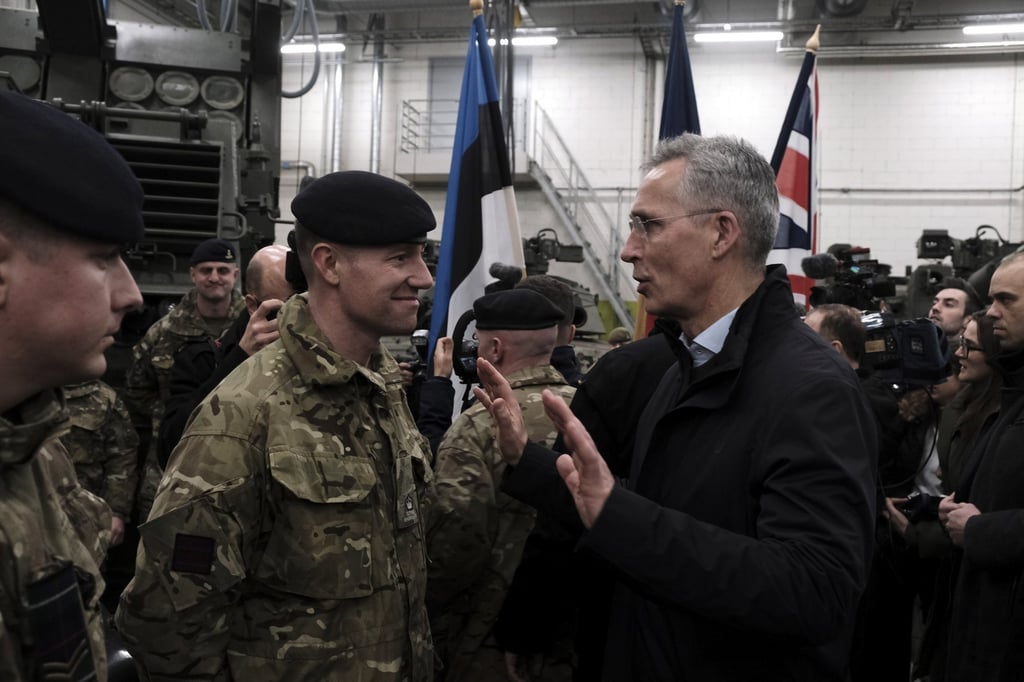
Meanwhile, influential hawks across the West are calling for expanded support to Asian allies and strategic partners to forestall a resurgent China. And as the new centre of global economic gravity, the Indo-Pacific region will continue to attract strategic attention. By and large, the cold war between the West and China is expected to continue.
Advertisement
Last month’s Munich Security Conference was a good preview of the West’s renewed resolve to punish any Russian provocations on the continent. United States Vice-President Kamala Harris warned of “swift, severe and united” sanctions if eleventh-hour diplomacy failed to prevent an “unprovoked invasion”. German leaders including Chancellor Olaf Scholz also signalled Europe’s determination to deter and punish Russian revanchism.
True to its words, just days after the confab, the West imposed coordinated sanctions after Russia deployed “peacekeeping” troops to rebel-held areas in eastern Ukraine. Germany even suspended the much-vaunted Nord Stream 2 gas pipeline project with Russia at the expense of its energy security. The European Union imposed its “harshest” and most “hard-hitting” sanctions yet as soon as Moscow commenced a full-scale invasion of Ukraine.
Advertisement
Despite its strong partnership with Russia, China has so far chosen to walk a tightrope. True, China has criticised Nato for ignoring Moscow’s security interests. But Chinese Foreign Minister Wang Yi has also clarified, most notably at the Munich Security Conference, that Beijing is committed to preserving the sovereignty and territorial integrity of all nations – and that “Ukraine is no exception”.
China also offered to help facilitate a diplomatic settlement between Russia and Ukraine in tandem with Western powers.
Advertisement
Select Voice
Select Speed
1.00x