
Internationalisation of the yuan complicated further by geopolitics
- China scored a win with the IMF assigning a higher weight to the yuan in its special drawing rights currency basket. But the currency still has a long way to go before it can challenge the global status of the euro and the US dollar

China has scored a win as the International Monetary Fund has assigned a higher weight to the yuan in its special drawing rights (SDRs) currency basket. The decision was made after a five-yearly review, which took the currency’s share in the basket to 12.28 per cent, an increase of 1.36 percentage points from the last assessment in 2016. That makes it the third largest, after the greenback and the euro, and is an acknowledgement of the currency’s rising international use and China’s economic status.
Slowly but surely, the yuan is on course to internationalise both as a currency of trade and a reserve currency. While the SDRs are not a currency per se, as synthetic monetary units, they can be exchanged for the currencies in the basket; hence the significance of the higher weight assigned to the yuan, which has already surpassed the Japanese yen, at 7.44 per cent and British pound, 7.59 per cent.
But, before China’s monetary nationalists start uncorking champagne, they need to face the reality that the US dollar has increased by 1.65 percentage points, taking its share to 41.73 per cent of the IMF’s currency basket.
So while the yuan has made progress at internationalisation, Beijing’s multi-year efforts to reduce reliance on the US dollar in trade and exchange, sometimes called de-dollarisation, will face even greater obstacles.
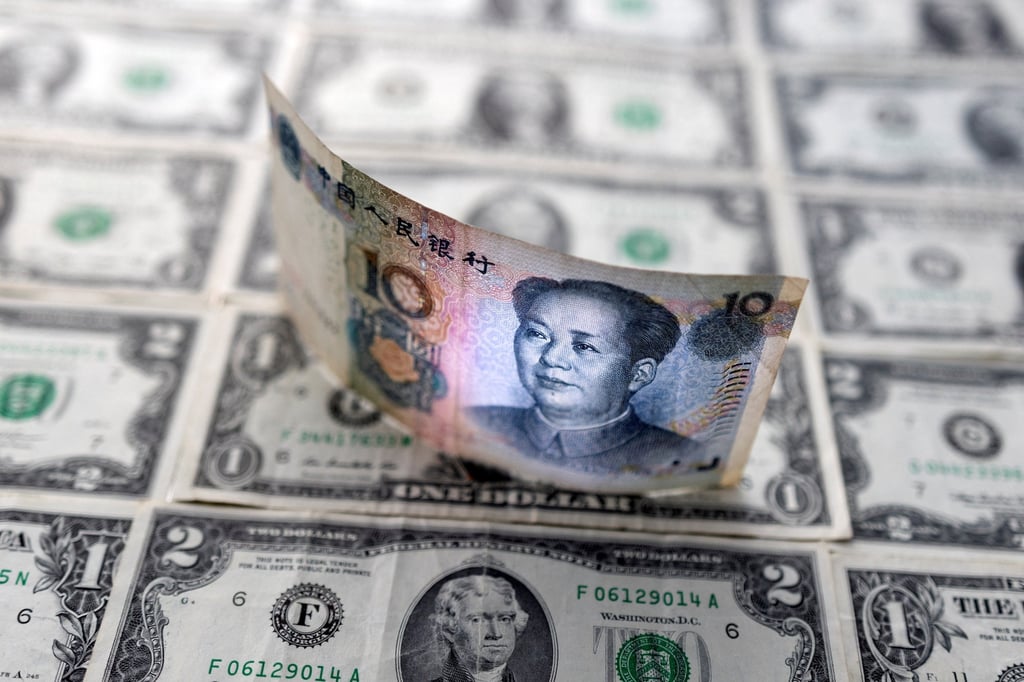
The SDR adjustment owes in no small part to the number of bilateral currency swaps with numerous countries around the world between their currencies and the yuan. At the end of 2020, China’s central bank had swaps with 40 global central banks, including 22 economies along the Belt and Road Initiative (BRI).