Advertisement

Opinion
For China’s officials, leaving zero-Covid behind is far harder than enforcing it
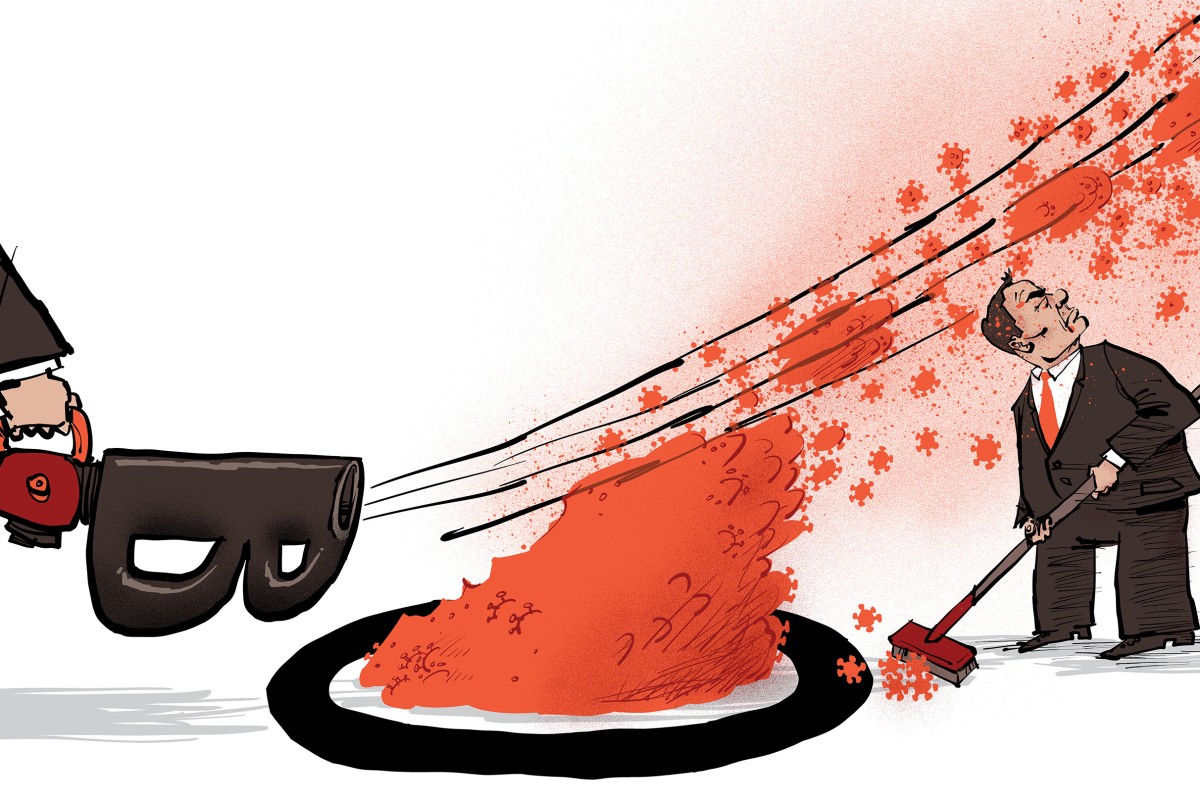
- The policy, while damaging, came with clear metrics that allowed local government officials to demonstrate their compliance
- The new mandate to simply let people get on with their lives leaves officials with no way to show success other than by downplaying the resulting rise in infections
4-MIN READ4-MIN
3
Karman Lucero is a Fellow at Paul Tsai China Centre at Yale Law School.
The abrupt end of China’s harsh zero-Covid policy appears to have surprised even the government officials that executed it. The course of both zero-Covid and its bewildering reversal offer important lessons about the strengths and limits of China’s government.
Typically characterised as highly centralised, China’s government is actually one of the most decentralised governments on earth in terms of regional and local fiscal responsibility. In other words, regional and local governments in China are disproportionately responsible for public expenditures compared with counterparts internationally.
It also makes sense; a country with China’s land mass and large population requires tens of millions of officials to carry out the orders of the centre and respond to problems in real time. There is a well-known Chinese saying: the mountain is high and the emperor far away, that bemoans the lack of state power and challenge of implementing policies in remote areas.
Advertisement
The Chinese Communist Party, and Xi Jinping in particular, have developed tools to move away from this dynamic and ensure compliance with central government policies on a granular level, such as mass mobilisation campaigns that involve a mix of propaganda and the deployment of individuals to carry out different policies.
While such strategies have succeeded when tied to clear metrics of success (such as increasing GDP numbers or keeping Covid-19 cases at zero), they tend to produce more mixed results when the goals are more vague or open-ended. For Chinese government officials, implementing zero-Covid appears to have been easier than coming out of it.
Advertisement
One key reason for this is the role that metrics play in demonstrating enforcement. Metrics are key to policy success and governance generally in China. While internationally China’s central government has developed a reputation for politically motivated and otherwise unreliable statistics, metrics serve as a primary method for the central government to monitor and rate local governments.
Advertisement
Select Voice
Select Speed
1.00x