Advertisement
.jpg?itok=Db2vCg_k&v=1673234007)
Opinion
Taiwan looking more like a pawn as US struggle against China loses steam
- US coverage of Tsai Ing-wen’s visit has been muted as China continues to make advances in peacemaking, hi-tech, de-dollarisation and economic growth
- Whether the Biden administration has had a change of heart about China is still uncertain but it appears Taiwan has merely been a pawn
3-MIN READ3-MIN
13

John F. Copper is the Stanley J.
As US president, Joe Biden quickly instituted a hardline China policy. In the ensuing months, he became more forceful. He has called President Xi Jinping an “autocrat” and seemed bent on painting the Communist Party as some evil dictatorship that threatens the United States and the US-designed liberal world order.
On this first visit to Europe as president, Biden called on America’s democratic allies to join him in an existential struggle against the authoritarian nations of the world.
Simultaneously, he adopted pro-Taiwan policies: provocative arms sales and even hints that America might alter its long-espoused one-China policy. By October, it was clear the US had declared a tech war on China.
Advertisement
He backed that up by appropriating billions of dollars in funds to enable the US to better compete against China’s technological prowess. He pushed negotiations with the Netherlands and Japan (two producers of high-grade computer chips) to upgrade sanctions against China. It escalated from there. Biden also sought to enlarge the “alliance” of democracies against China.
Then it seemed the Biden administration changed course or, at least, it moderated its China stance. Last November, Taiwan held midterm elections that saw President Tsai Ing-wen’s party rebuffed by the electorate. Voters saw her as engaged in an unnecessary war of words with Beijing. They did not want a war. Biden did not appear to offer Tsai much in the way of sympathy or support.
Advertisement
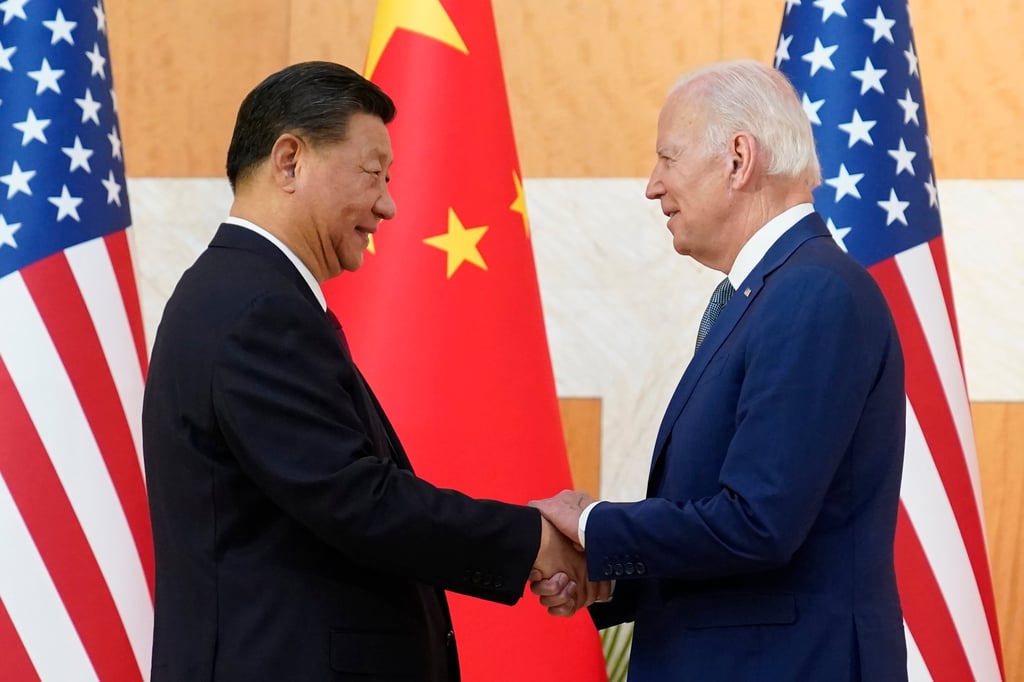
Soon after, Biden met President Xi Jinping at the G20 summit in Bali and spoke to him in friendly – possibly even conciliatory – terms as if he wanted to dampen the feud between their countries. This alarmed Taiwan’s residents.
Advertisement
Select Voice
Select Speed
1.00x