
Editorial | Test of national unity for divisive Erdogan
- Following his election victory, Turkey’s long-standing leader faces huge economic and foreign policy challenges, and the need for more inclusiveness on the home front

President Recep Tayyip Erdogan is set to dominate Turkish politics for a quarter of a century after voters re-elected him for another five years.
A country that votes against change after 20 years would not normally be the focus of global attention. But that is not the case with a key Nato member and Chinese Belt and Road Initiative partner, whose independent foreign policy can irk East and West alike.
Erdogan defied runaway inflation and an economic crisis to win a historic run-off in the presidential election. The final 52.1 per cent to 47.9 per cent margin extends the rule that has both modernised and divided the Muslim country of 85 million.
He has wrought conservative transformation of Turkish society while asserting policy independence, attacking – though later toning down – criticism of China’s treatment of its Uygur minority; condemning the invasion of Ukraine and then refusing to join Western sanctions and increasing trade with Russia; and delaying and opposing expansion of Nato membership while remaining a United States security ally.
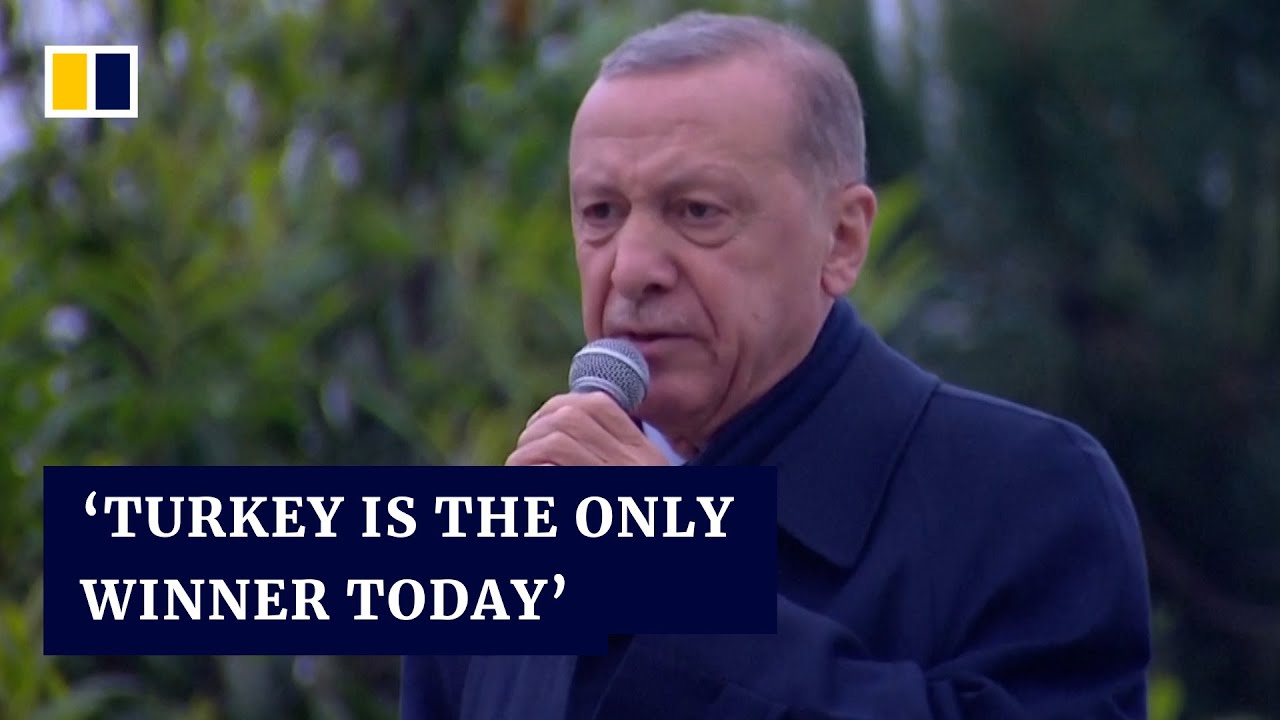
03:49
Turkey’s Erdogan wins presidential election, extending rule into third decade
There is no reason not to expect more of the same. Because of Turkey’s pivotal geopolitical position, there will always be underlying tensions.