Advertisement

Opinion
Asean’s hopes for easing US-China tensions through defence diplomacy depend on getting its house in order
- Southeast Asian nations have showcased their diplomatic muscle recently, aiming to bring the US and China together for talks and joint activities
- However, their hopes of ensuring Asean centrality are hampered by a need for consensus, divergent threat perceptions and internal divisions
4-MIN READ4-MIN
10

Richard Javad Heydarian is an Asia-based academic, currently a Professorial Chairholder in Geopolitics at the Polytechnic University of the Philippines.
“We hope … to showcase a new open and confident image of the [People’s Liberation Army] Navy,” Chinese officer Lei Xiao said during recently concluded major multinational naval drills in Indonesia. For its part, the PLA Daily – the news outlet for the People’s Liberation Army – described the Komodo multilateral naval exercise off South Sulawesi as a crucial step to “further deepen mutual understanding and practical cooperation” among regional states.
As many as 40 warships from three dozen nations across the Indo-Pacific took part in the high-profile drills in Indonesian waters. What made this year’s exercises particularly important was the joint participation of both US and Chinese naval forces, underscoring the growing centrality of Southeast Asia to regional geopolitics.
This is crucial in light of the virtual breakdown of military-to-military diplomacy between the superpowers, whose armed forces have been involved in several near misses in the South China Sea and Taiwan Strait in the past month alone. Defence chiefs from the US and China failed to hold direct talks at this year’s Shangri-La Dialogue in Singapore, where both sides blamed each other for the deteriorating regional security architecture.
Advertisement
Concerned by the troubling turn of events, Indonesia, this year’s chair of the Association of Southeast Asian Nations (Asean), is once again at the centre of efforts to mediate US-China relations. Southeast Asian nations have also welcomed a goodwill visit by a PLA Navy contingent to de-escalate maritime tensions in the South China Sea.
Indonesia is pushing for greater unity in Asean as well. Accordingly, it is organising the first naval drills among regional states later this year to assert Asean centrality in the Indo-Pacific. Despite its good intentions and growing strategic influence, a Jakarta-led Asean must overcome deep internal divisions to effectively mediate long-term detente between the US and China.
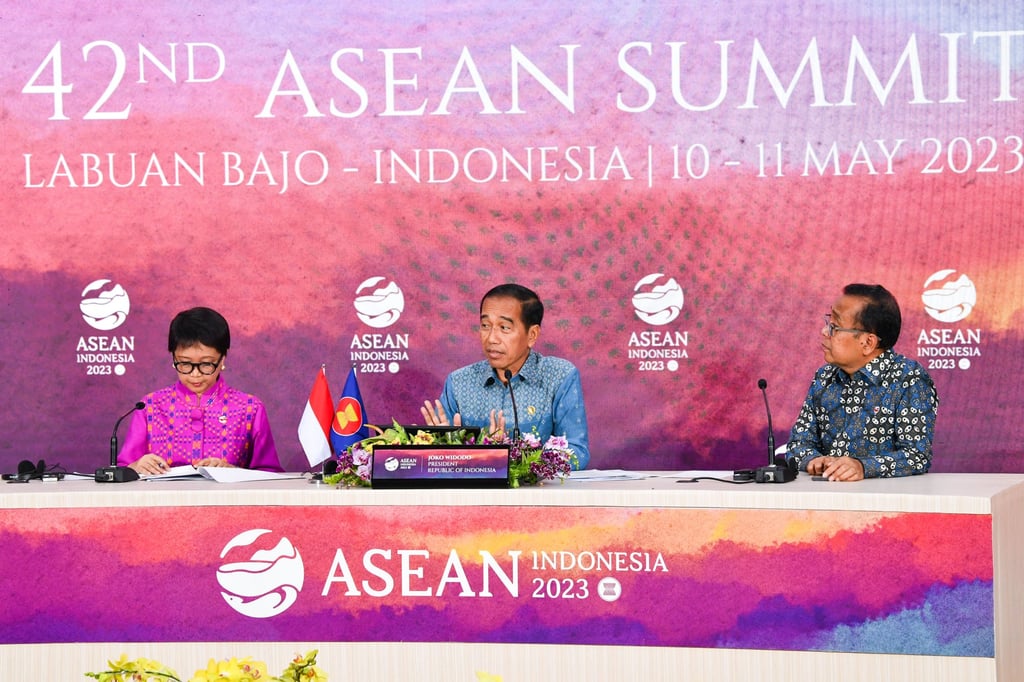
Asean nations have showcased their diplomatic muscle, such as when they played a central role in bringing Washington and Beijing together last year following US House Speaker Nancy Pelosi’s visit to Taiwan. Meanwhile, Singapore has warned the two nations against sleepwalking into conflict, emphasising the unintended consequences of tit-for-tat sanctions and aggressive rhetoric.
Advertisement
Select Voice
Select Speed
1.00x