
-
Advertisement
Sexual harassment and assault
Opinion
Alice Wu

Opinion | Nearly six years since #MeToo, sustained collective activism is the way to tackle sexual abuse

  • Without the change wrought by the #MeToo movement, flawed as it was, the Spanish football chief wouldn’t have quit over an unwanted kiss
  • However, as recent events in Hong Kong and Japan show, women and men are still vulnerable to sexual harassment and abuses of power

Reading Time:3 minutes
Why you can trust SCMP
Julie Keiko Fujishima, former president of Johnny and Associates, wipes away tears during a Tokyo press conference on September 7, amid allegations of child sexual abuse by the agency’s late founder and her uncle, Johnny Kitagawa. Beside her is the agency’s new president, Noriyuki Higashiyama. Photo: Kyodo

It has been nearly six years since American actress Alyssa Milano, following explosive accusations of predatory behaviour by film producer Harvey Weinstein, urged those who had been harassed or assaulted to write “me too” on Twitter; the phrase had first been used by social activist Tarana Burke on MySpace more than a decade ago to support women who had been sexually abused.

The #MeToo movement that took off in 2017 has raised awareness of the sexual abuse, harassment and rape culture across the globe.

Although the movement wasn’t without its flaws and would draw a backlash, it has also brought change. In some places, laws have been enacted to protect women. There have been high-profile cases where powerful individuals finally faced legal consequences. And perhaps the greatest contribution the movement has made is the conversations being had about how prevalent abuse of power is across cultures.
Advertisement
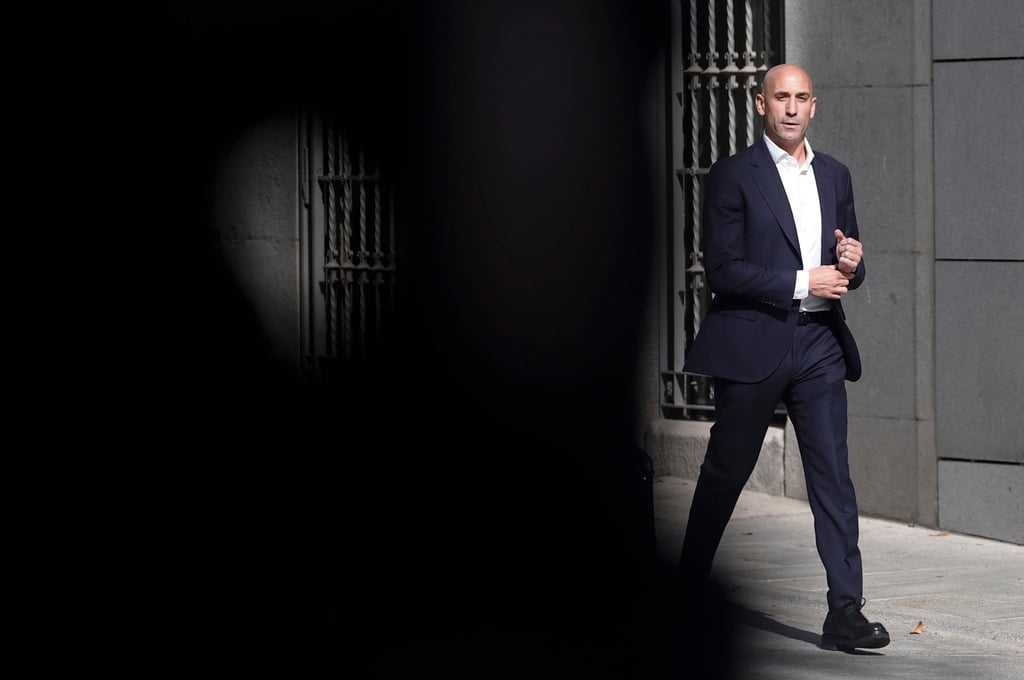
Without the movement, Luis Rubiales would not have resigned as head of Spain’s football federation after forcibly kissing a Women’s World Cup winner on the lips last month.
He had arrogantly and repeatedly said, “I’m not going to resign,” and held out for weeks, even as his unwanted kiss provoked outrage, the prime minister of Spain called the kiss “an unacceptable gesture”, female players said they would not play for the country as long as he was in charge, and Fifa, soccer’s governing body, suspended him for 90 days.
Former Royal Spanish Football Federation chief Luis Rubiales arrives at the National Court in Madrid on September 15. He was ordered to appear before the court over accusations of sexual assault and coercion after the kiss with Spain forward Jenni Hermoso following the team’s win in the Women’s World Cup. Photo: EPA-EFE

Rubiales also claimed to be a victim of a “witch hunt” by “false feminism”. This is rich coming from him. The women who were accused and burned at the stake for being witches in the 16th and 17th centuries lacked the power to even speak as witnesses; a “false feminism” would be the kind that would let him off the hook.

Advertisement
Select Voice
Select Speed
1.00x