Advertisement

OpinionWhy do so many firms seeking growth in China overlook a Hong Kong listing?
- So far, it’s mainly US-listed Chinese companies that raise funds in Hong Kong for regional growth
- But multinationals can also take a secondary listing or spin off a Chinese unit for a primary listing. Either allows the creation of a Chinese-registered entity ring-fenced from global operations and trade friction
3-MIN READ3-MIN

After sharp contractions, many economies are bouncing back from Covid-19. Growth is now expected to stabilise, with mature markets returning to pre-pandemic levels. However, China stands out when it comes to long-term growth opportunities.
Foreign direct investment jumped 17.8 per cent in the first 10 months of this year, to 943 billion yuan (US$142 billion) according to China’s commerce ministry. As businesses plan for the future, one certainty is that they will continue to raise capital for growth.
Last year, nine China-headquartered companies listed in the United States used a secondary listing in Hong Kong to raise funds for regional growth. But many other multinational corporations seem to have overlooked this way of generating capital.
Advertisement
The Hong Kong stock exchange is one of the world’s largest markets for initial public offerings (IPOs). Last year, it raised more than US$51 billion, just behind Nasdaq’s US$57 billion. The appeal of the exchange is set to grow as it pushes reforms to streamline its listing regime for overseas issuers.
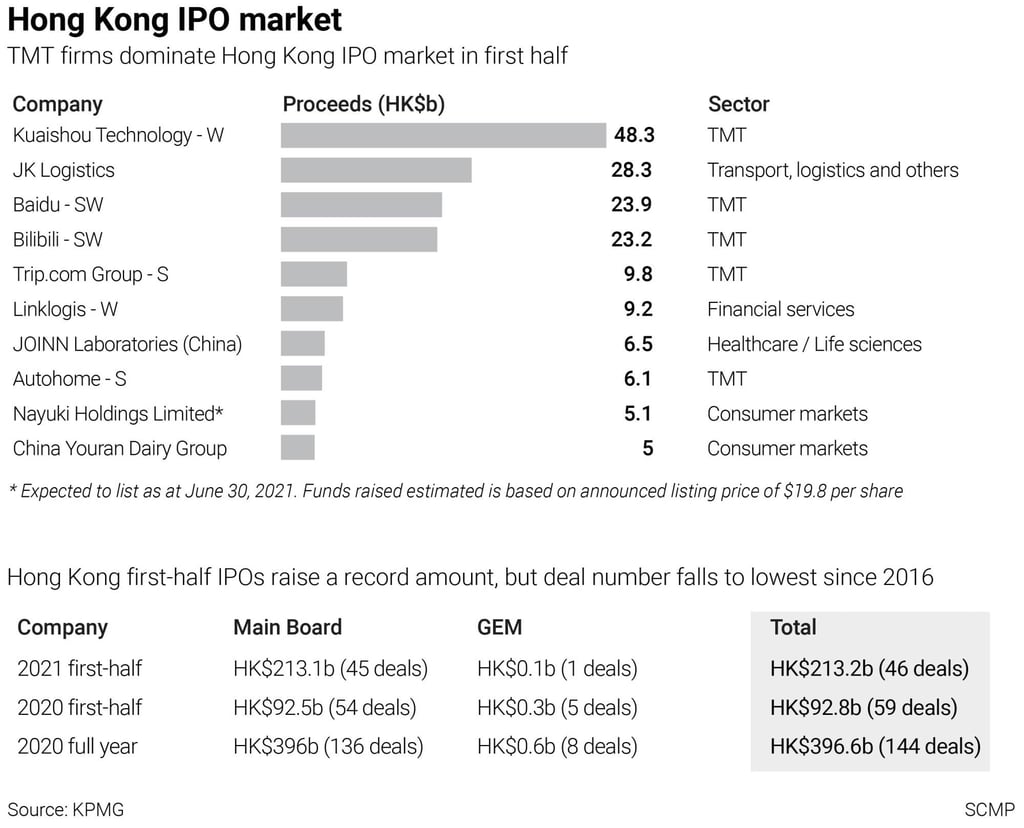
So far, it is mainly Chinese companies capitalising on this route to growth. Alibaba Group Holding set the ball rolling with a US$13 billion listing in November 2019.
Advertisement
Advertisement
Select Voice
Select Speed
1.00x