Advertisement

Opinion
Asian-Americans face a long fight to be included in America’s story
- The Asian-American and Pacific Islander community is surging but is comparatively late in its push to secure a museum on the National Mall in Washington
- Museums dedicated to women, Latinos and LGBTQ people are also in the works as building space becomes scarce and Congress is increasingly dysfunctional
3-MIN READ3-MIN
4

Before joining the Post in Washington, Mark worked in China, India and Japan for the Wall Street Journal and Los Angeles Times and was a Knight-Wallace journalism fellow.
The Asian-American community is flexing its muscles, fighting discrimination and using its expanding numbers to amplify its political voice on the tailwind of the vibrant Asia-Pacific region.
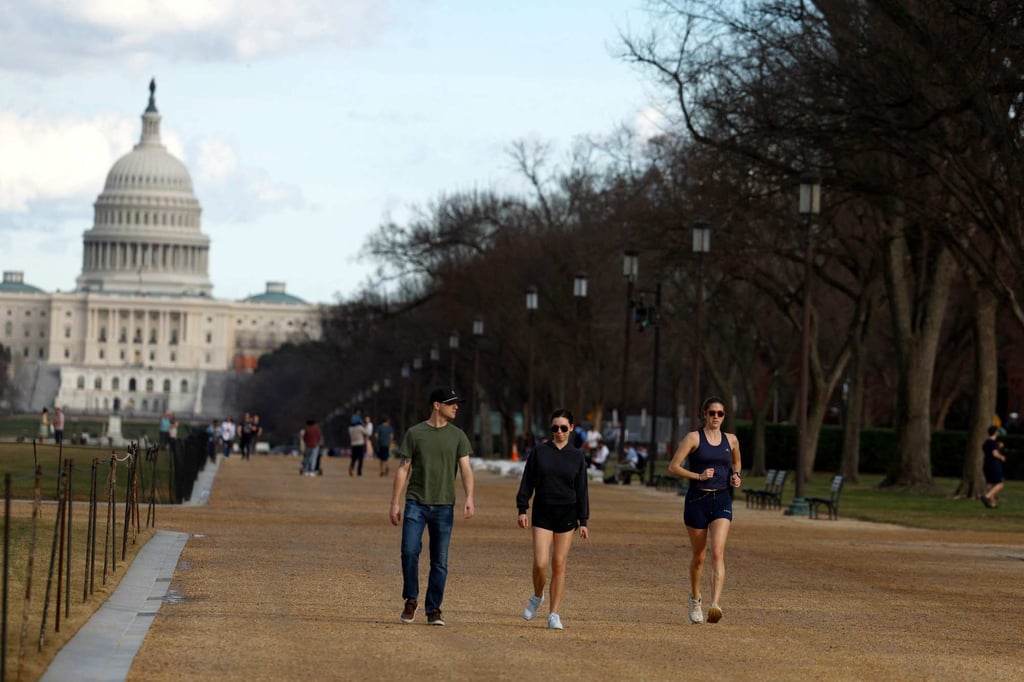
For American communities, an increasingly coveted indicator of their prominence and historical struggle is a national museum on the National Mall, the great swathe of green space in Washington between the Lincoln Memorial and the Capitol, dubbed “America’s front yard”.
This ticket to inclusion in America’s story is highly coveted. The National Mall and adjacent memorial parks are now home to a wide variety of museums, monuments, national galleries and memorial gardens, from iconic Smithsonian museums dating back to the 19th century to more recent arrivals celebrating African-Americans, Native Americans, Korean and Vietnam war veterans, and Holocaust victims.
Now the Asian-American and Pacific Islander (AAPI) community wants a spot. It might need to be patient – as the National Mall runs out of space, competition intensifies, Congress becomes increasingly dysfunctional and the community grapples with its own divisions.
Unlike others, the AAPI community is so diverse as to border on unwieldy. It represents 53 UN member countries, about 30 per cent of the Earth’s land mass and 50 distinct ethnic groups speaking upwards of 100 languages.
On the political spectrum, it ranges from relatively conservative Vietnamese to relatively liberal Filipinos while papering over the history of arrivals from mainland China, Taiwan and Hong Kong identifying as Han Chinese, Tibetans, Wei and Uygur Muslims. Wealth and education spans those from Singapore, with an annual per capita income of around US$140,000, to Afghanistan, at less than US$400.
Advertisement
Select Voice
Select Speed
1.00x