The irony of Louvre’s soft-power lesson for China, as museum’s history tour comes to Hong Kong
An exhibition depicting the story of France’s Louvre museum, currently in Beijing and coming to Hong Kong, is a lesson in cultural power, although its history of acquiring relics from colonies would be frowned upon today
Mona Lisa. Venus de Milo. The Winged Victory of Samothrace. To most people, Paris’ Louvre Museum is a magnificent repository of some of the world’s best-known art.
Now, an exhibition featuring more than 100 artworks and models of the museum has turned the spotlight on the institution itself. It illuminates the story of the Louvre and its transformation from a medieval fortress 800 years ago, to a grandiose palace and then a home to academies and studios before it became the world’s most visited museum and a cultural titan.
Louvre Museum director Jean-Luc Martinez. Photo: AFP
“The Louvre is a famous name. But it is also a beautiful palace, and Inventing Le Louvre shows the important relationship between the museum and French history,” says Jean-Luc Martinez, director of the Louvre since 2013. He hopes the exhibition, currently at Beijing’s National Museum of China and moving to Hong Kong in April as part of Le French May’s 25th anniversary programme, will encourage more Chinese people to visit the real thing.
Advertisement
In return, China can learn from the story of how the Louvre became a cultural powerhouse as it, too, wants to promote its own culture abroad, says Pansy Ho Chiu-king, the Hong Kong patron helping to fund the exhibition in Beijing and Hong Kong.
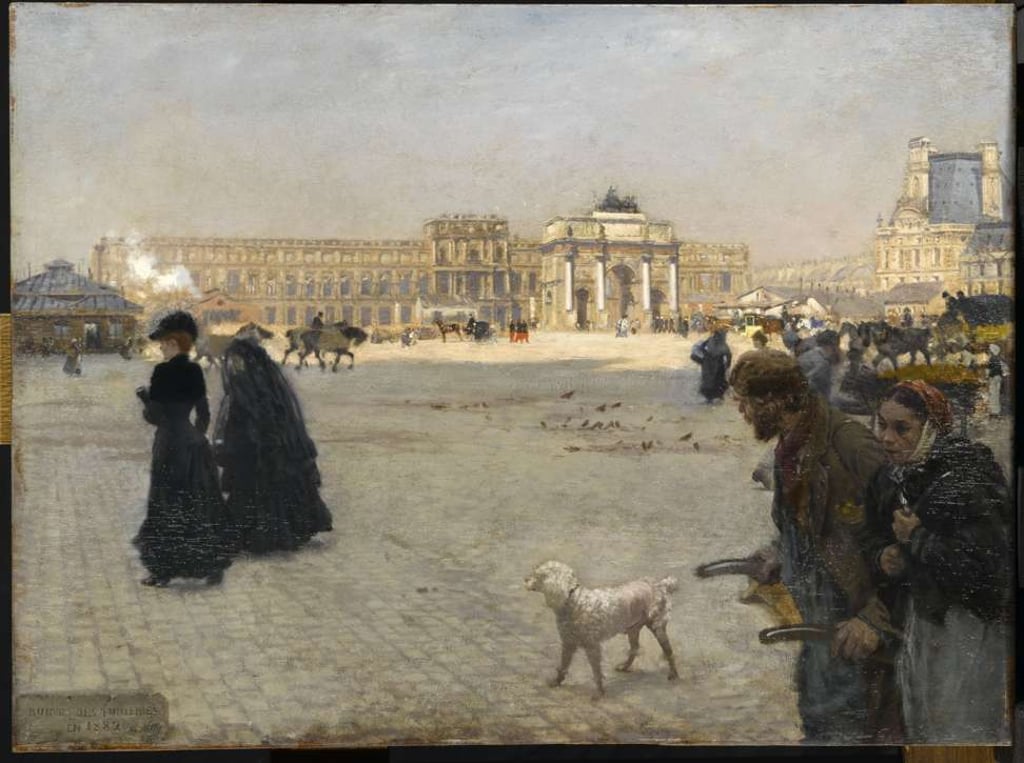
The Ruins of the Tuileries Palace in 1882 by Giuseppe de Nittis.
Any museum would be envious of the Louvre’s attendance figures. A staggering 7.4 million people – 70 per cent of whom were from outside France – visited in 2016. It has consistently been more popular than any other top museum, including the British Museum, the Metropolitan Museum of Art in New York and the National Palace Museum in Taipei.
Advertisement
Yet the Louvre’s story makes it a dubious role model for China. The incredible range of the exhibits coming to Hong Kong reflects the past glory of the same Western imperialism and feudalism that the Communist Party in China finds most repugnant.
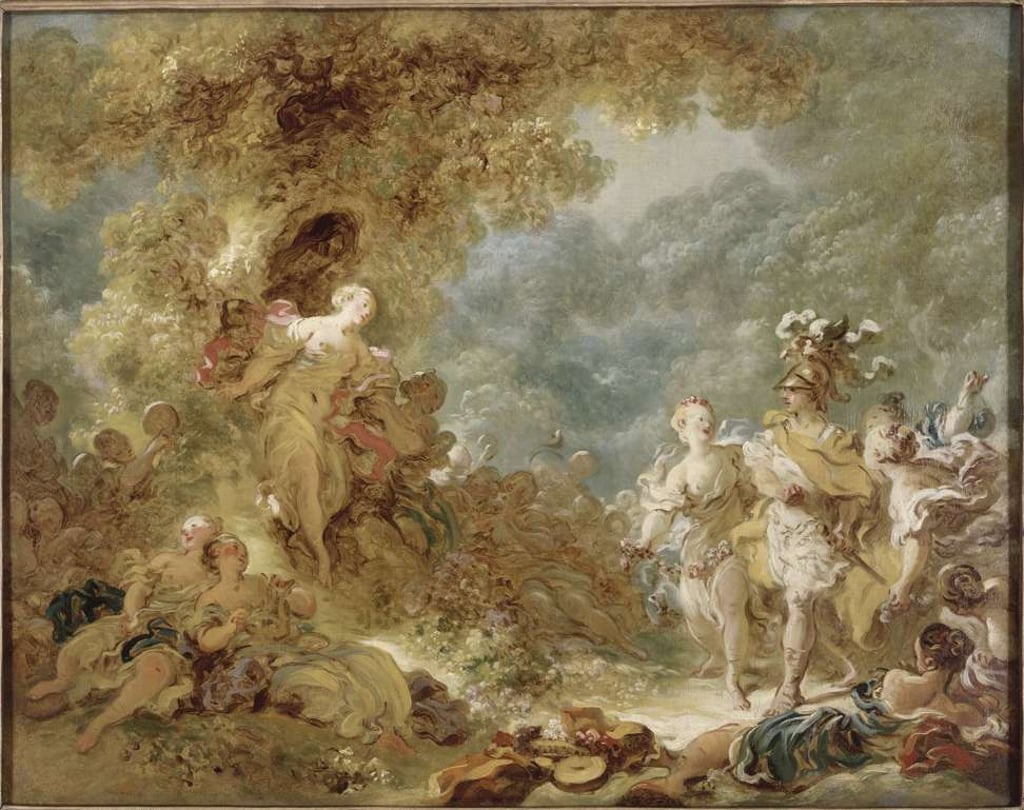
Rinaldo in the Enchanted Forest by Jean-Honore Fragonard.
Consider the effect that a third millennium BC statue of Prince Gudea of Lagash, an archaeological find claimed by France in 1881, and Jean-Honore Fragonard’s Rinaldo in the Enchanted Forest, an exuberant symbol of the decadent Ancien Regime in Paris, would have on the psyche of some of the more old-fashioned cadres.