Annual Indian art exhibition returns to Hong Kong, encourages collectors to look beyond modern masters
While mostly featuring well-established artists including Ganesh Pyne and M.F. Husain, this year’s Kalasutra show will also draw attention to up-and-coming Indian artists such as Neeraj Goswami and Maya Burman

The Kalasutra exhibition of Indian art returns to Hong Kong bigger than ever this year, with paintings by 26 artists including Ganesh Pyne, Jogen Chowdhury, Lalu Prasad Shaw and M.F. Husain.
This is the fourth such exhibition that the New Delhi-based Sanchit Art gallery has held in Hong Kong since 2014 and it hopes that the annual event is helping to address the peculiar invisibility of Indian art in Hong Kong.
Hong Kong’s next generation Indian jewellers add sparkle to the city
International auction houses have traditionally held their main Indian art sales in London, New York and Mumbai rather than Hong Kong. There is no major gallery in the city that specialises in modern and contemporary Indian art, despite a sizeable and long-established Indian community which counts many serious collectors among them. One of them is Harry Banga, the commodities billionaire, who will inaugurate the exhibition’s opening with his wife Indra at 6.30pm on Wednesday.
The Hong Kong show continues to feature mostly well-established artists, including some of the biggest names associated with the Progressive Artists’ Group (PAG) such as Husain and F.N. Souza. These artists, whose works heralded a new internationalism in Indian art, remain the most in demand, as shown by the prices for their artwork. The two most expensive Indian pieces of art sold at auction were both by PAG-affiliated artists: Untitled (1995) by V.S. Gaitonde and Birth (1955) by Souza, which both fetched over US$4 million in 2015.
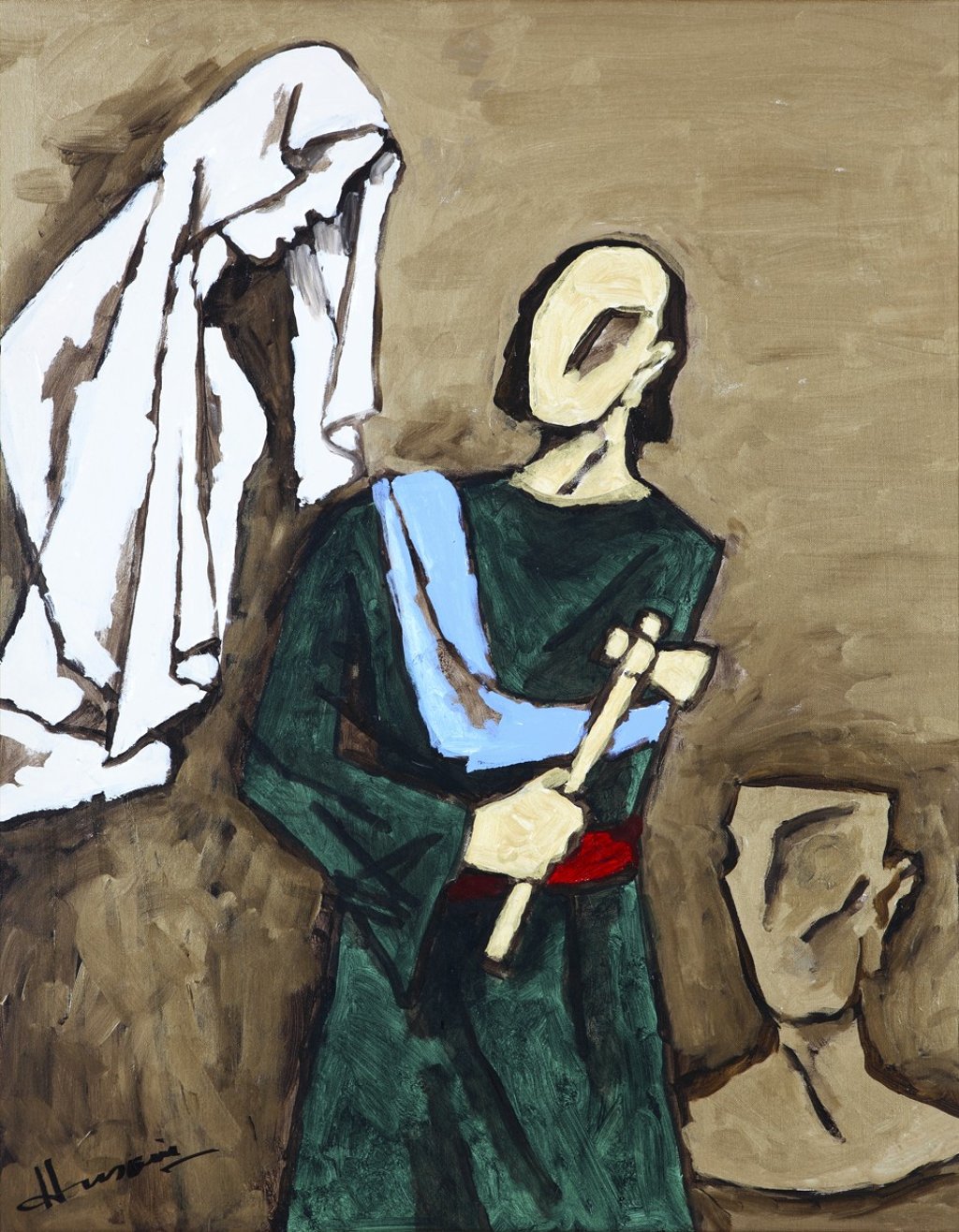
The exhibition also features artists from a range of other schools and styles. There are paintings that draw directly from Indian traditions, such as one of the Hindu gods Radha and Krishna by Calcutta artist Subhaprasanna, and Dipak Banerjee’s Gautam Buddha (2014). This year also marks a conscious attempt to encourage collectors to look beyond mature artists, as curator Arun Ghose explains.