Shenzhen’s new design museum should give Hong Kong food for thought as it awaits completion of M+ museum of visual culture
Design Society centre in Shekou, architecturally striking and with airy gallery spaces, opens with exhibition by partner the Victoria and Albert Museum, but it’s the debut in-house show that will excite visitors more

Design Society is a new cultural landmark and a symbol of the Chinese city of Shenzhen’s evolution from sweatshop to creative economy. Designed by star Japanese architect Fumihiko Maki, it houses the first overseas outpost of the Victoria and Albert Museum. That is a lot to live up to.
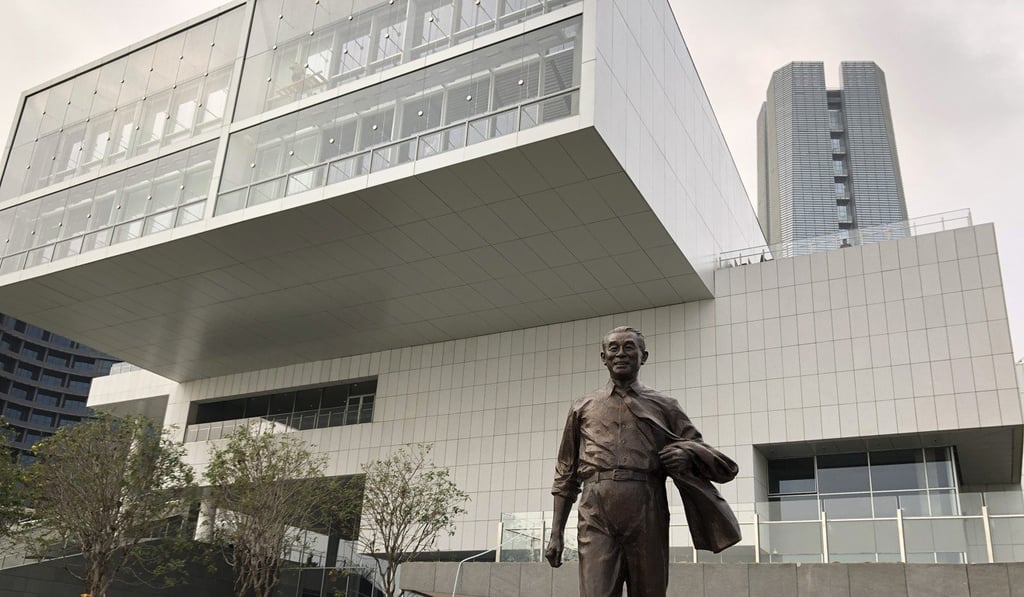
Gleaming white, with 71,000 square metres of floor space, and sitting on the waterfront at Shekou, it is a sight to behold.
Its interior is airy, featuring a three-storey atrium, and flooded with natural light. Floor-to-ceiling glass windows stop visitors in their tracks with a 180-degree view of Deep Bay (also called Shenzhen Bay), with Hong Kong’s northern New Territories in the distance. Its exhibition galleries are high-ceilinged and have very few columns, which allow for dramatic architectural interventions.
There’s a lot more to Hong Kong neighbour Shenzhen than cheap suits and massages
There is a public roof garden with bar and cafe and a dramatic staircase that descends four floors to a waterfront promenade featuring a prominent statue of Yuan Geng, a former executive vice-chairman of China Merchants Group – a Chinese state-owned conglomerate with assets from Hong Kong to Djibouti in the Horn of Africa, and the founder of Design Society – who is venerated in China for turning sleepy Shekou into the nation’s first industrial zone and a laboratory for the Communist Party to experiment with a market economy.
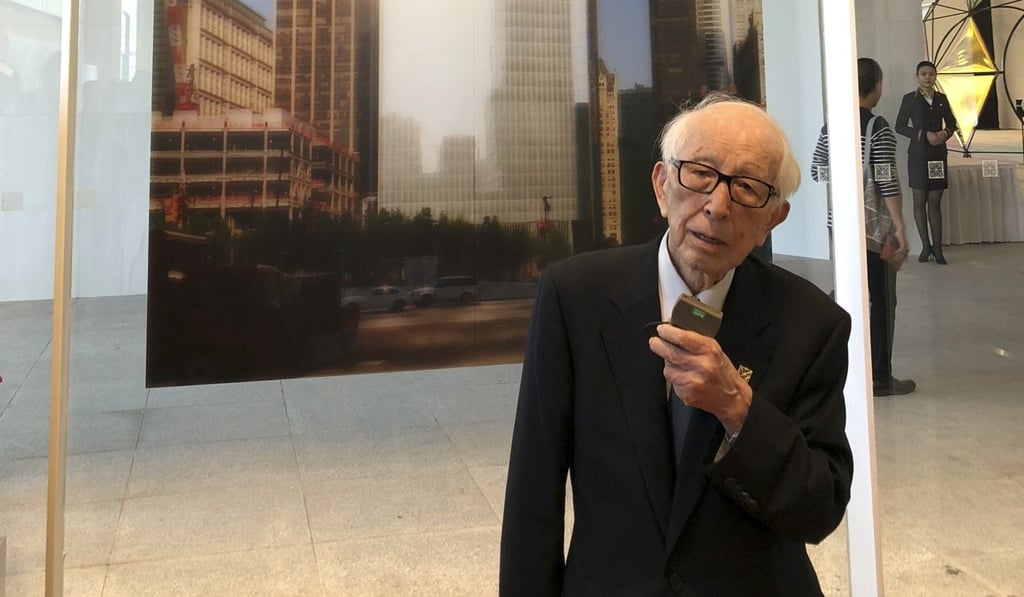
Maki, 89, attended the December 1 opening of the 1.3 billion yuan (US$196 million) building, officially called Sea World Culture and Arts Centre. As Maki told the attending VIPs, the centre is a tribute to the power of design and the power of China, in an age when the United States and Europe are ceding their global influence to the East.
Yuan, who died last year, would have been proud. Shekou’s embrace of free market principles has become China’s way, and this corner of China is at the forefront in the application of patentable knowledge and ideas to move Chinese factories up the global value chain. Apple, IBM and Philips have opened offices in Shekou Net Valley. Chinese tech giants Tencent, DJI and Huawei are all Shenzhen firms.
A certain amount of self-congratulatory propaganda is inevitable; the Shekou Museum of Reform and Opening, which occupies one of the centre’s four galleries, will be operated by CMG and opens next year. That’s also when a branch of the Guangfu Museum – a private museum of Chinese antiques owned by the dealer/ collector Ma Weidu – will open, as well as most of the shops and restaurants, an art school and an education centre for the National Ballet of China.