VideoLion dancing: history, traditions and its special place in Hong Kong culture explained
Once there was a lion dance troupe in every walled village in what became Hong Kong’s New Territories, and more than 100 still perform their dazzling routines; but as teens swap sport for studying, recruiting dancers gets harder

A golden lion leaps from one high pole to another, shaking its bright, tasselled mane while the clash of drums and cymbals drowns out the gasps of onlookers at Pacific Place, an upmarket shopping mall in the heart of Hong Kong’s financial district.
The show is a frenzy of colour, sound and movement. The teenage performers, from Kwok’s Kung Fu and Dragon Lion Dance Team, demonstrate their agility and expert co-ordination at every turn, pulling off somersaults and backflips in mid-air. All the while, eyes, ears and mouths blink and twitch on the magnificent lion costumes, mimicking the mannerisms of real lions.
The lion dance is a familiar sight during the recently ended Lunar New Year festivities in China, Southeast Asia and other parts of the world in which diaspora Chinese communities have settled. Along with the equally recognisable dragon dance, the lion dance is traditionally performed to bring good luck for the coming lunar year and scare away evil spirits – a custom stretching back more than 1,000 years.
Hong Kong is home to more than 100 lion dance troupes, according to Kwok’s head coach, Andy Kwok Man-lung, who inherited the role from his father, Kwok Wing-cheong. Kwok Snr founded the troupe in 1969, and instilled a deep love of the traditional art form in his son, who started learning lion dancing as soon as he could walk.
“When my mum was pregnant with me, she always went to see lion dance performances,” recalls Andy Kwok, 44. “I may have learned something from the womb.”
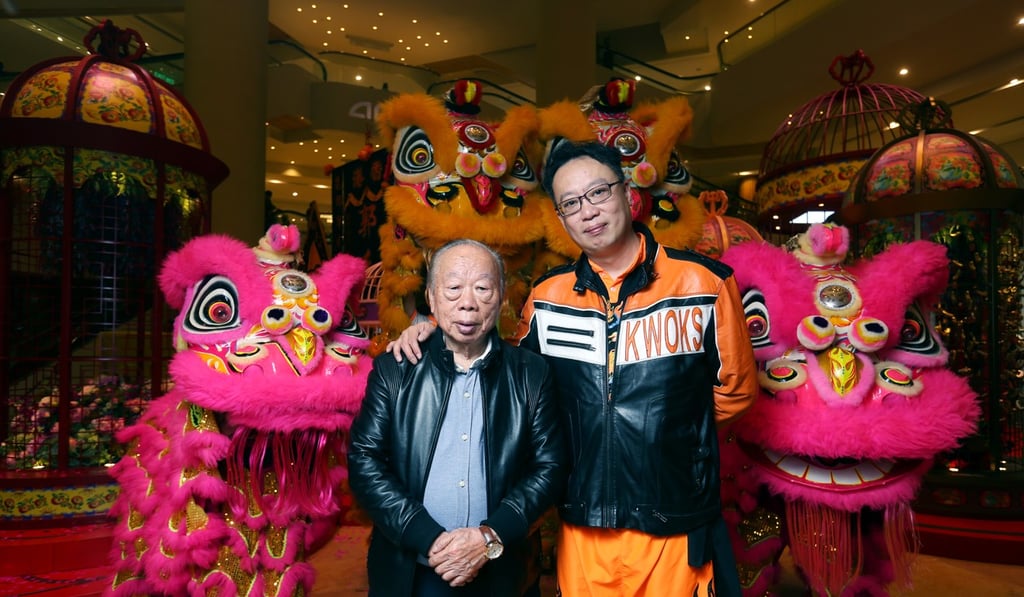
He became the team’s head coach in 2000, and now trains more than 100 youngsters in two styles of lion dancing, as well as other Chinese martial arts.