ReviewAmerican Ballet Theatre’s Whipped Cream revives a forgotten score by Richard Strauss with mixed results
This frivolous, family-friendly Alexei Ratmansky fantasy is superbly performed by a sparkling cast on stage and the Hong Kong Philharmonic Orchestra in the pit, but the plot is too flimsy for a satisfying Hong Kong Arts Festival experience

Whipped Cream (a direct translation of the original German title, Schlagobers) is a two-act ballet by Alexei Ratmansky, one of the world’s most sought-after choreographers, set to a score by Richard Strauss.
First performed in 1924 when the composer was director of the Vienna State Opera, music and ballet quickly fell into obscurity until Ratmansky created this new version for the American Ballet Theatre in 2017.
The lure of an unknown score by a major composer is understandable and Ratmansky’s idea was clearly to create a work that would be fun for children while offering enough musical and choreographic substance to satisfy adults.
Svetlana Zakharova and Vadim Repin entertain Hong Kong with dazzling virtuosity and some help from their friends
The ballet – which is staged for this year’s Hong Kong Arts Festival – succeeds only partially on both fronts and is, perilously, flimsy: this is a bowl of whipped cream with nothing much underneath.
Nonetheless, it offers much to enjoy for both the eye and ear and is superbly performed by a sparkling cast on stage and the Hong Kong Philharmonic Orchestra in the pit, conducted by Ormsby Wilkins.
Ratmansky has kept Strauss’s original plot. A Boy attends his First Communion, then goes to a pastry shop with his friends and stuffs himself with whipped cream until he makes himself sick and is taken to hospital. When the shop closes its contents – including tea, coffee and cakes - come to life. After being terrorised by the doctor and nurses, the Boy escapes to find himself in a magical land of sweets where he becomes King and Princess Praline his bride.
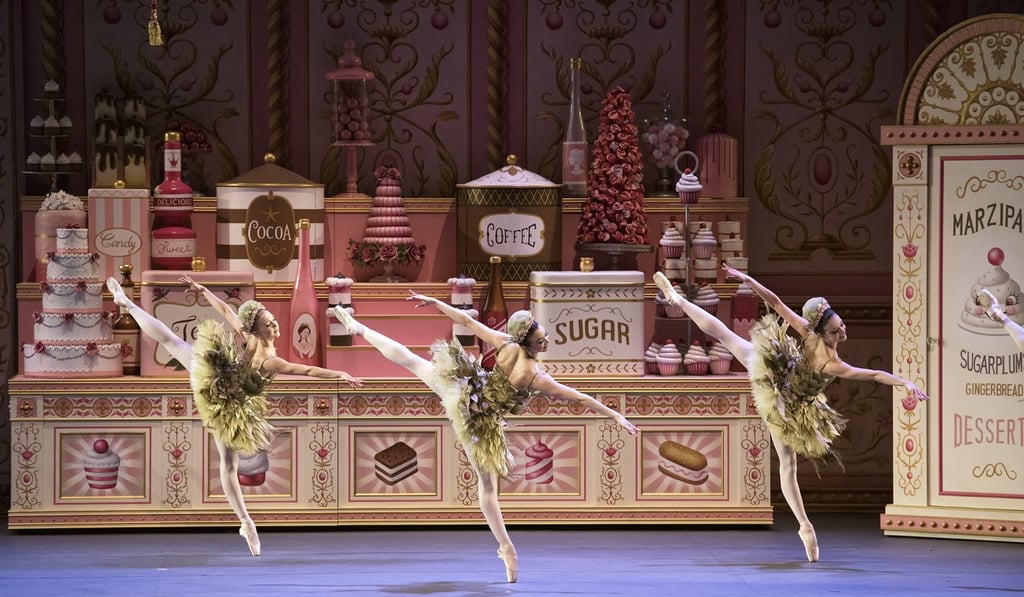
If this frivolous, family-friendly fantasy seems a strange venture for the composer of complex, sophisticated works such as Salome or Der Rosenkavalier, it’s important to understand that it was created in the aftermath of the first world war, in a country that had lost not only the war but an empire. At a time when people were struggling with poverty and deprivation, Strauss wanted to produce a lighthearted work which would, as he said, “create joy”.