Art Dubai 2018: an oasis of cultural expression amid Middle East’s increasing political strife
More than 100 galleries from around the world showed at the luxurious event, illustrating that political tension and wars in the Middle East don’t seem to be hampering the art industry

The 12th edition of Art Dubai lived up to its reputation as one of the most culturally diverse emerging art fairs in the world. From March 21 to 24, more than 100 galleries from a staggering 48 countries presented a wide range of modern and contemporary art at the Madinat Jumeirah resort, with more works by artists from the Middle East, Africa and South Asia than you’d see at any other major international art fair.
The venue is a luxurious, sandstone-coloured hotel compound with its own upmarket souk, ornately designed in traditional Arabic style. The five-star surroundings, lavish after-parties, beautiful people attending and, most importantly for the participants, the continued buying and selling of art, all point to a market that is taking the political strife and wars in the Middle East in its stride.
Art Basel Hong Kong opens with sale of US$35 million painting
Four Tehran galleries that were at Art Dubai 2017 have not returned. Pablo del Val, the fair’s international director, says that has nothing to do with the fact that the United Arab Emirates has joined Saudi Arabia in its increasingly strident warning against Iran as a security threat, and is merely due to different considerations by each gallery.
The five Iranian galleries that were there, however, have some of the strongest booths in the fair.
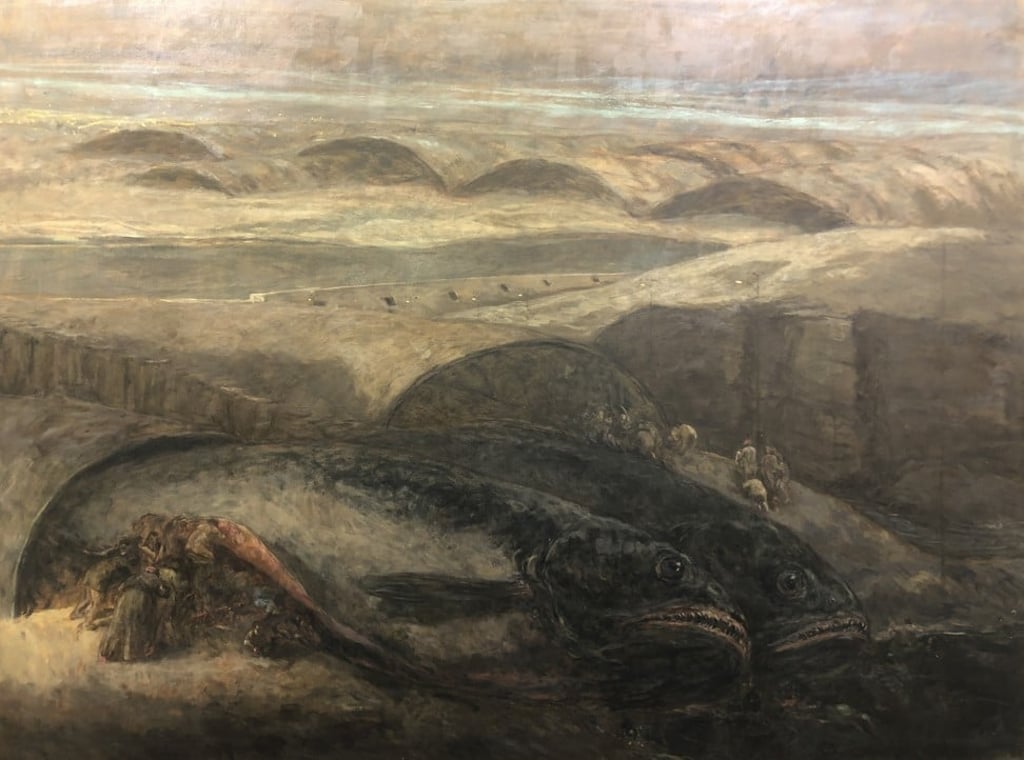
Majid Fathizadeh’s new paintings at Tehran-based Ab-Anbar Gallery’s booth are mystical, exquisitely painted Boschian nightmares. In his Fermentation, sharp-teethed fish lie on a beach, both monstrous and helpless as they are fed on by humans.