Sam Smith meets sacred in gay troupe’s apsara dance – ‘This is the new Cambodia, inclusive, compassionate and brave’
Cambodian American upended 1,400 years of tradition by using gay men to portray apsaras – celestial nymphs who seduce mortals with their beauty – in classical dance. Their mould-breaking show is winning recognition and fans

A slender silhouette appears onstage. Black hair dotted with flowers tumbles down an arched back. Jewels glitter from the wrists of outstretched arms, the fingers gently curved back in a gesture that is synonymous with Cambodian classical dance. Ching (finger cymbals) chime as the dancer begins the graceful movements that once mesmerised Angkorian kings.
This is a dance that has been performed for more than 1,000 years. An art considered to be of the highest form, performed by females who entertained royalty inside the walls of Angkor, the ancient Cambodian temple city. A spotlight shines on the dancer, highlighting piercing red lipstick, smoky eyes, a crown of jewels and intricate silk costume.
As the figure flutters across the stage, something quickly becomes apparent. The silk sash draped across a naked torso reveals this to be a troupe that has taken tradition and brought it into the modern world. This is Cambodia’s first gay dance company – a group of six young men that goes by the name Prumsodun Ok & Natyarasa and whose members are breaking down barriers through their work.
“We want to give new life to this ancient tradition by preserving what was given to us and to reimagine that tradition, create new works, new costumes, new dances,” says the group’s leader, Cambodian-American Prumsodun Ok, or Prum, who is a TED Fellow.
“In that process, create a new face of Cambodia; one that goes beyond genocide, beyond poverty and tragedy. Yes, that history still affects Khmer people, but that’s not all we are,” he says.
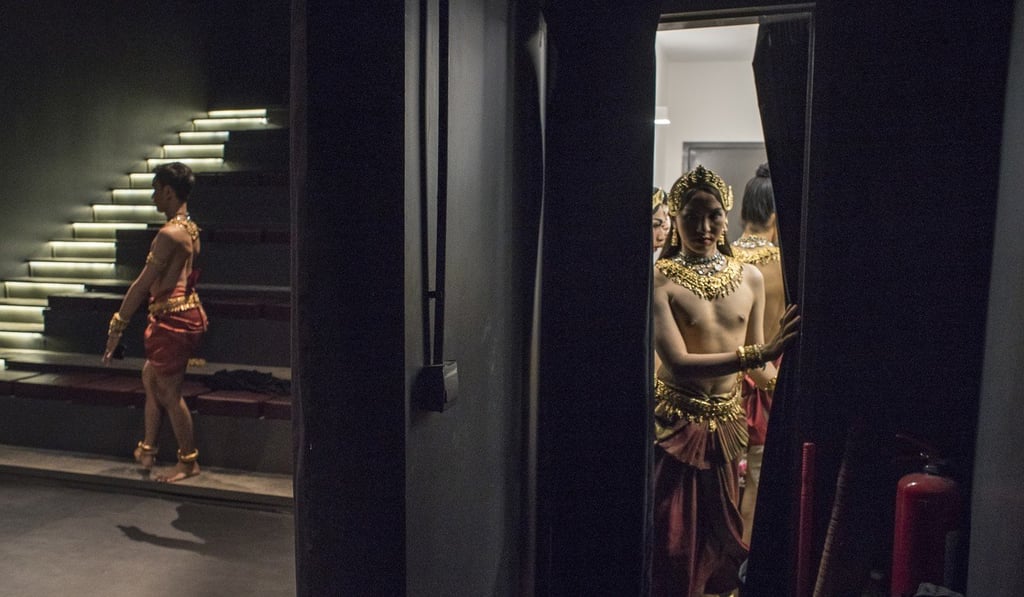
Cambodian classical dance – often referred to as apsara dance – is one of the country’s most treasured ancient art forms, with a history stretching back to the 7th century. More than 1,800 images of the ethereal beings decorate the temple walls at Angkor.