How European Enlightenment thought reached China via Macau and its Baroque St Joseph’s Seminary – a new history
Historian Cesar Guillen-Nunez’s book on St Joseph’s Church and Seminary in Macau explores 17th- and 18th-century Western influences on Chinese art and will appeal to anyone interested in art history and bilateral cultural exchange

St Joseph’s Church and Seminary is among the most interesting, yet least visited, of Macau’s historic church complexes.
Painted pastel lemon, the buildings are accessed via a sweeping flight of massive stone stairs up from the roadside. The former clerical residences house a fascinating small gallery of centuries-old religious art, and the church boasts a magnificently plastered, allegorical interior dome.
Macau for arts lovers – how to pack the most into a 12-hour tour
This sense of being passed over by the tourist crowds may be because the cluster is located a long (and not particularly picturesque) walk from the city’s much photographed historic core around Senado Square and the side streets leading to St Paul’s ruins.
The relative isolation of not being an immediate drawcard helps ensure that the complex offers a quieter, more reflective – and overall far more pleasant – visitor’s experience than can be found elsewhere in the city, especially on tourist-thronged weekend afternoons.
Panamanian art historian Cesar Guillen-Nunez’s new book, Macao’s College and Church of St Joseph: Splendour of the Baroque in China, should do much to stimulate further awareness about this superb heritage cluster, and forms a long-awaited companion volume to his earlier publication, Macao’s Church of St Paul: A Glimmer of the Baroque in China, from 2009.
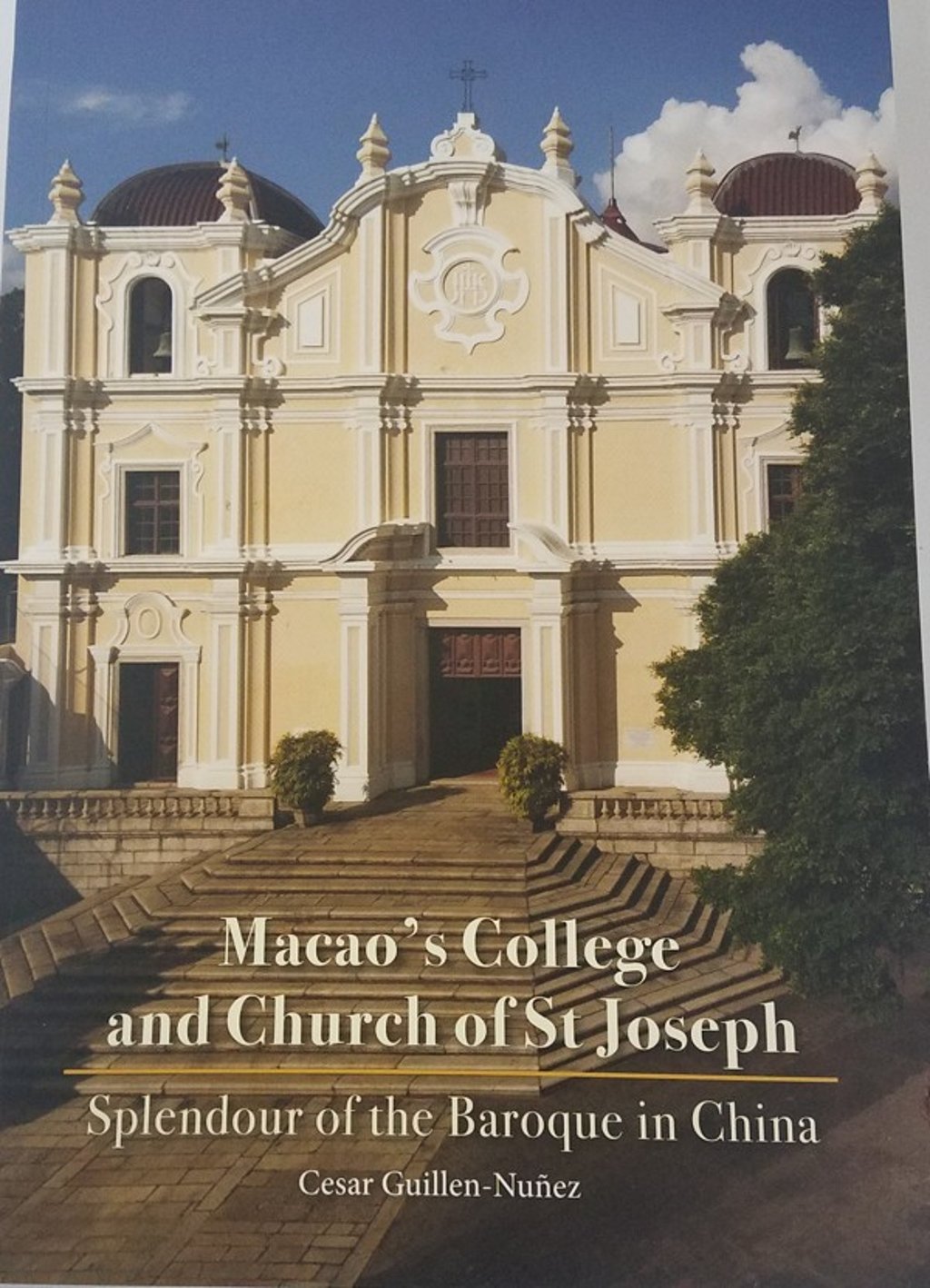
In this magisterial study of the Jesuit seminary and its extraordinary Baroque church, Guillen-Nunez – a long-term Macau resident – has finally completed his thorough exploration and documentation of Macau’s 17th- and 18th-century artistic connections between China and the Western world. The narrative starts in the late 17th century, around the period when the author’s earlier work on St Paul’s collegiate church ends, and continues until the late 18th century.