Graphic novels: how to see, read and appreciate them, in all their rich variety
The range and variety of graphic novels continues to expand, and whether or not Nick Drnaso’s Sabrina makes it to the Man Booker prize shortlist, they are here to stay

The recent fuss about the Man Booker prize’s longlisting of a graphic novel for the first time, the chilling, understated Sabrina by Nick Drnaso, may have piqued your interest in exploring this ever-expanding medium further, or perhaps for the first time.
Not everyone has grown up reading comics, and the demands of their various verbal and visual literacies can take some adjusting to, particularly if you’re used to the orderly typesetting of prose novels. It’s never too late, though, to try stretching your brain – both sides of it when it comes to graphic novels, where looking is as important as reading.
This experience comes through in the wordless migration parable The Arrival by Shaun Tan (2006), which follows a man who has gone on ahead of his wife and children to seek work abroad and struggles to navigate his alien surroundings and their indecipherable language.
Unable to make himself understood, he resorts to making simple drawings to communicate his need for a room. The reader shares his bafflement and gradually grasps with him how his strange new homeland works. Tan’s genius in children’s picture books blossoms in this extended tale for all ages, illustrated in almost photographic sepia images.
Charles Burns is a true artist of the graphic novel
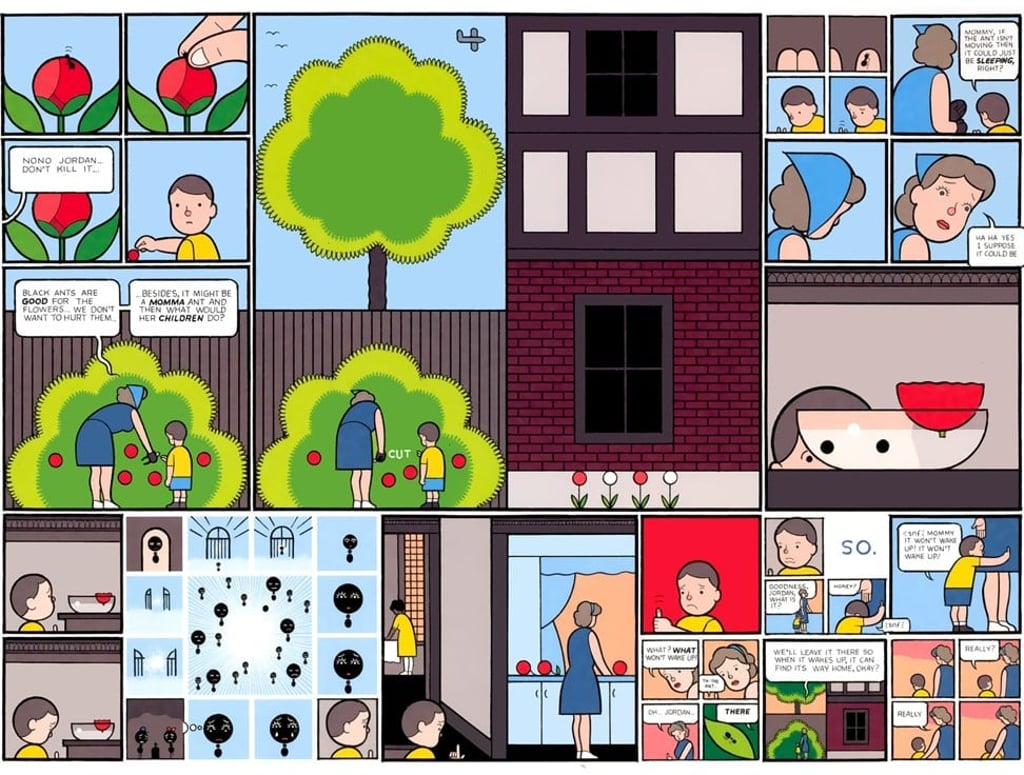
One lifetime’s dawning awareness and evolving cognition is graphically and poetically conveyed in Chris Ware’s Acme Novelty Library #20 (2010): Lint is an approachable introduction to Ware’s oeuvre (a key influence on Drnaso). From newborn child to anguished adolescent, to career, marriage, fatherhood and decline, each year of Lint’s life is distilled into an intricate, humane diagram of a few telling moments of consciousness per page.