‘One thing I am not is a pacifist’: Eye in the Sky’s Gavin Hood on nature of modern warfare
The financial and human cost of military conflict, its collateral damage and questioning of the archetypal Hollywood ‘hero’s journey’ is at the heart of director’s third consecutive anti-war movie

After reading the screenplay for Eye in the Sky, a thrilling, minute-by-minute account of a fictional military operation featuring three remote-controlled drones – a Predator aircraft armed with laser-guided missiles and two tiny surveillance vehicles, one disguised as a hummingbird, the other a beetle – filmmaker Gavin Hood had a powerful reaction. “Oh, my God,” Hood recalls thinking. “Is this stuff real?”
The answer, as it turns out: Pretty much. If some of the technology, which sounds like the stuff of science fiction, isn’t in use just yet, Hood says it’s coming. “Not only is it just around the corner, but our film is very soon going to be out of date.”
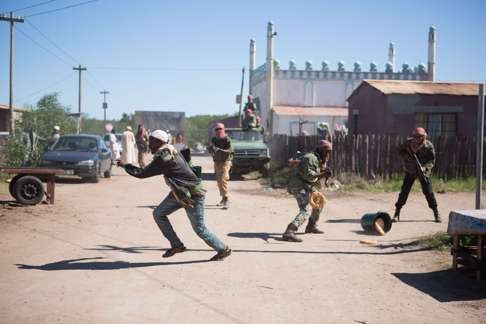
In Washington recently to promote his new film at a preview screening – at which viewers were treated to a demonstration of a miniature military drone called the “Black Hornet” – Hood acknowledged that there is a tension between the film’s futuristic technology and its ripped-from-the-headlines verisimilitude. Against a backdrop of high-tech gizmos, the story revolves around the hunt for a fugitive Englishwoman suspected of working with the East Africa-based al-Shabaab militant group. (That character is based on real-life terrorism suspect Samantha Lewthwaite. Actual Somali refugees who fled al-Shabaab were cast as Kenyans in the film. Hood says he interviewed military intelligence officers and drone pilots for authenticity.)
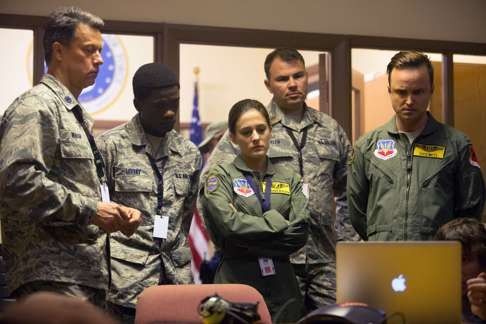
The story, by Guy Hibbert, jumps back and forth between an al-Shabaab safe house in Nairobi, where a suicide bombing is in preparation, and an English military base. From that command post, a British intelligence officer, played by Helen Mirren, interacts with a constellation of far-flung intermediaries: two drone pilots in Nevada; ground troops in Kenya; image analysts in Hawaii (who can, we’re told, ID a suspect based on a grainy photo of her ear); and cabinet-level observers in a London briefing room.
Despite the film’s preoccupation with military jargon and tech-speak – “You tell me the next time you take off my GBU-12s!” Mirren’s colonel barks, after learning that ordnance has been removed from her Predator – Hood insists he was not interested in telling a conventional war story – that is, one concerned with who wins the day and who loses, and how that is accomplished. The more important question, he says, is, “How do we win the big fight?”
That question has long intrigued the 53-year-old Hood, a Los Angeles-based South African who was drafted by his country’s marines at age 17 and subsequently trained as a lawyer. (He practised for only 4½ months before embarking on a successful career as an actor. Hood, who has a small part in Eye, says he got the idea for his directorial debut, the 1999 legal thriller A Reasonable Man, from a court case he heard about while practising law.)