How No. 1 Chung Ying Street director Derek Chiu struggled with key moments in Hong Kong history – from 1967 riots to 2014 protests
Veteran filmmaker Derek Chiu saw promises of funding broken and constant production hassles, but at last his award-winning take on political protest in Hong Kong is to be screened in the city

Veteran Hong Kong filmmaker Derek Chiu Sung-kee’s No. 1 Chung Ying Street won best picture at the 13th Osaka Asian Film Festival in March, but there was a time when he doubted whether the film would ever be screened.
Part of its focus is the deadly anti-British riots of 1967 in Hong Kong, an episode Chiu was prompted to research by someone who took part in them, and who approached him to make a film about the politically charged events, which were both a spillover from China’s Cultural Revolution and a radical response to colonial misrule.
The film’s story involves three young adults – Chun-man (played by Yau Hawk-sau), who attends a left-wing, pro-Beijing school, his childhood friend Lai-wah (Fish Liew Ziyu) and her rich classmate Chi-ho, (Lo Chun-yip) – who were caught up in the eight months of riots and bombings that left more than 50 people dead and more than 800 injured and only ended when then-Chinese premier Zhou Enlai called a halt.
Brother and sister tale depicts the torn Hong Kong society left behind by 2014 Occupy protests
To give the film added relevance for Chiu’s target audience – today’s young generation – he incorporated a second storyline about contemporary protest movements.
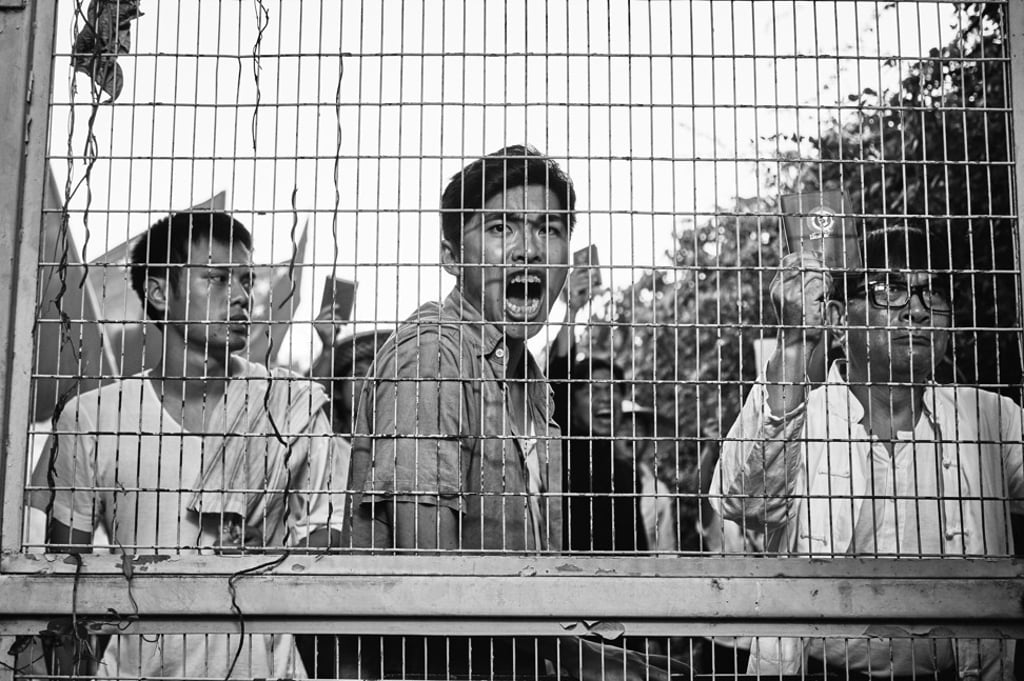
“We study history because it is a mirror to the future. The more I research, the more I realise how history is repeating itself,” says Chiu, noting the similarities between photos taken during the “umbrella movement” protests in 2014, also called Occupy Central, and those during the 1967 riots, especially those showing clashes between police and protesters.
I was constantly in fear each day, worrying if the production team would show up the next day
So the second part of No. 1 Chung Ying Street is set in 2019 and follows the lives of another three young adults – played by the same trio of actors. It shows them facing the consequences of their participation in the 79-day occupation of key roads in the city five years earlier to demand full democracy for Hong Kong, and at the same time defending a piece of farmland in Sha Tau Kok on the border with China, from property developers.