How Bruce Lee’s fighting style tapped Chinese and Western philosophy, from the I Ching to Nietzsche and Jean-Paul Sartre
Lee studied in Hong Kong under the legendary Ip Man, who encouraged his students to think about Buddhist and Taoist principles. Western philosophers lined his bookshelf. He took from all of them to develop his martial arts style

In a special series commemorating the 45th anniversary of Bruce Lee’s death on July 20, 1973, we aim to set the facts straight – as well as exploring some little known trivia – about the life of the martial arts legend.
Chinese martial arts have a strong grounding in metaphysics, and emphasise the constant interplay between the physical action of fighting and the spiritual aspects of the fighter’s relationship with the universe.
But that wasn’t true of martial arts schools in the United States in the mid-20th century, which were wholly focused on fighting technique. So when Bruce Lee, who had studied the wing chun style in Hong Kong under the legendary martial artist Ip Man, began teaching in the US, his inclusion of the philosophical aspects of kung fu gained him the reputation of a philosopher.
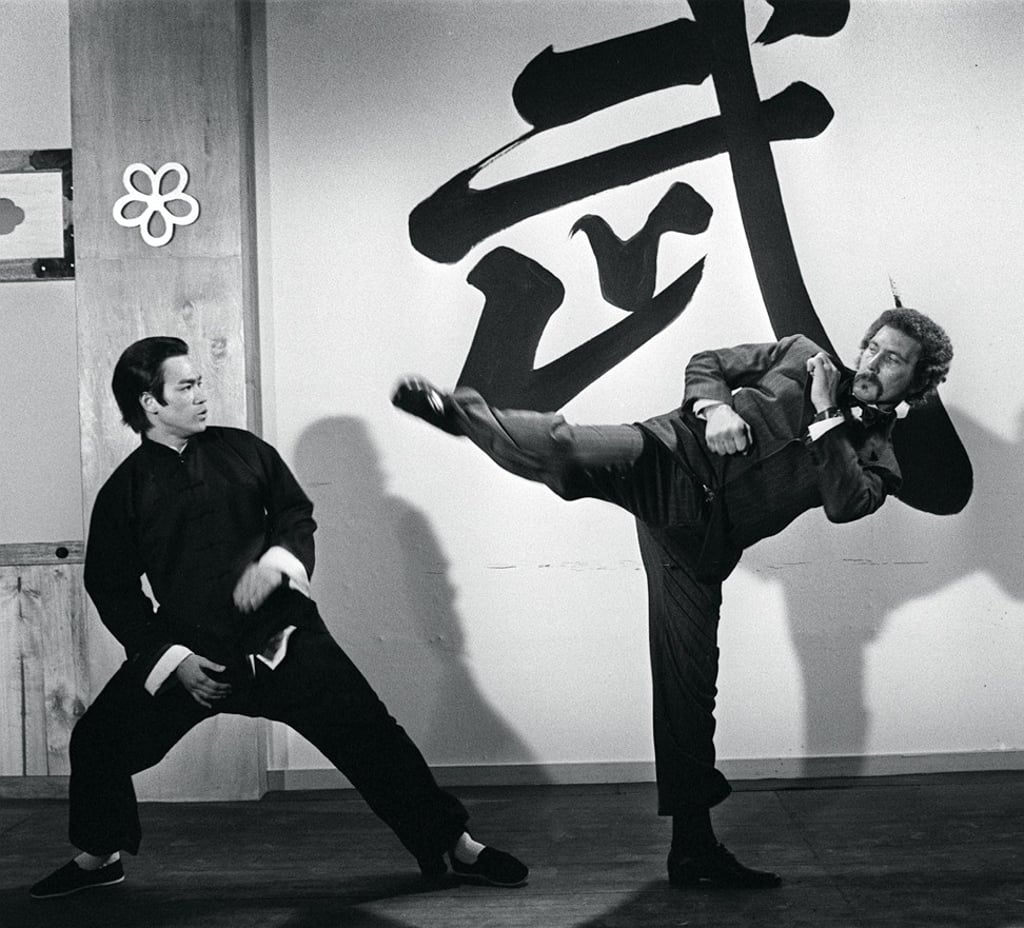
Ip’s school had encouraged students to think about Buddhist and Taoist principles, and the idea of becoming fluid like water – a central belief of Lee’s own jeet kune do fighting technique – was something Lee learned from his teacher.
Lee’s ideas about the need to constantly adapt while fighting also relate to the Chinese literary classic I Ching (The Book of Changes) and its central principle that everything is continually in flux, so one must learn how to manage change. (Interestingly, there do not seem to be any allusions to Sun Tzu’s ancient book on warfareThe Art of War in Lee’s writings.)