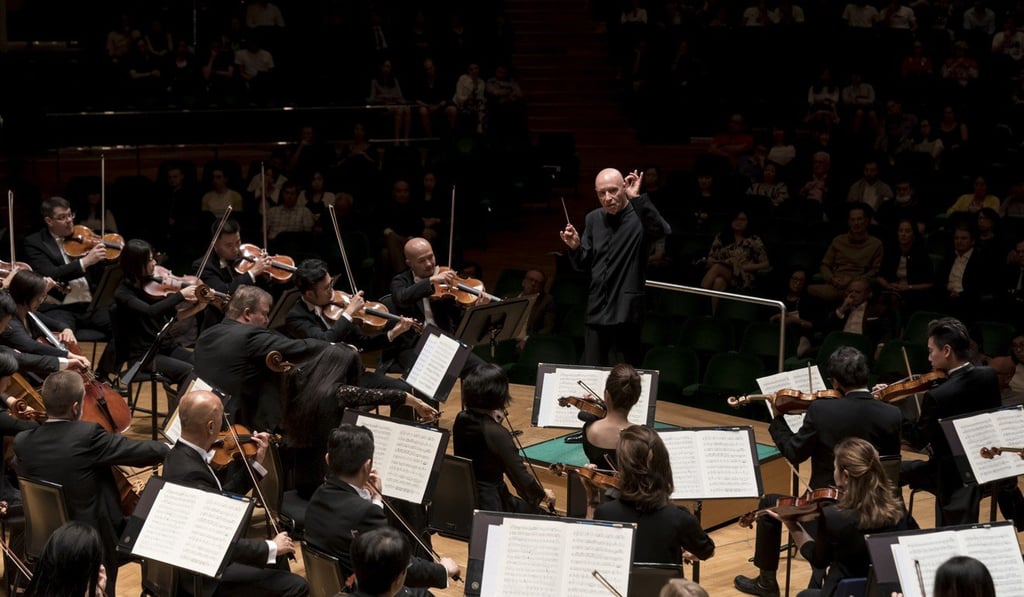
Review: HK Phil/Christoph Eschenbach/Tzimon Barto – contrasts abound in evening of Brahms and Dvorak
Soloist in German composer’s monumental second piano concerto mixed power with poetry in a performance matched by gorgeous orchestral playing, while conductor set players free to delight in Dvorak symphony

It would be easy to assume that a concert pairing of two late 19th century works composed within a decade of one another would be performed in a distinct late-romantic style.
Even considering Johannes Brahms’ high regard and support for Antonin Dvorak’s music and future career in German-speaking Europe, it’s an assumption that’s entirely off the mark, as seasoned American-born pianist Tzimon Barto and the Hong Kong Philharmonic Orchestra under German-born veteran pianist and conductor Christoph Eschenbach demonstrated. Showing both sides of the romantic coin, they highlighted just how unalike the chosen masterworks are.
Written late in life and separated by an astonishing 22 years from his comparably youthful first concerto, Brahms’ famously symphonic Piano Concerto No 2 in B-flat major is a veritable roller coaster.
Barto’s gentle and reflective answer to the opening horn call in the first movement Allegro non troppo began a careful unravelling of instrumental interplay, alluding to omnipresent drama. Powerful chordal playing from Barto in the unusually early cadenza was cleverly contrasted with his subsequent use of extremely hushed pianissimo and, despite the movement’s intermittent outbursts of passion, the overall mood of serenity and calmness remained intact.
The “tiny wisp of a scherzo”, as Brahms ironically called his turbulent Allegro appassionato second movement, is anything but small, and typical of the scherzi found in third movements of symphonies. Barto again contrasted virtuosic restlessness with dreamy and poetic passages while Eschenbach ensured beautiful, engaged string playing throughout.