American pianist Jeremy Denk offers a pathway to the sublime in Hong Kong recital
Echo of Glenn Gould in soloist’s interpretations of late works by Mozart, Beethoven, Schubert and Prokofiev

The piquant Jeremy Denk set himself a challenge in his recital at the University of Hong Kong by presenting an ambitious programme of solo piano works that explored the notion of profundity and whether it exists in music.
His choice of pieces for his Hong Kong debut was notable for the fact they were written late in each composer’s life and at a time of personal foreboding. However, while all of them show degrees of structural audacity and adventurous tonal exploration, in or of themselves none can conclusively be deemed profound.
The American is a soundscapist, capable of communicating an understanding of the music at every turn. Prokofiev’s Visions Fugitives allowed him to show off that ability, as he seesawed between a finely weighted touch and bold dramatic execution.
François-Frédéric Guy Plays Beethoven review: bold musical choices and a few shaky moments
Denk approached Mozart’s famous Rondo in A Minor, K511, in a rather leisurely manner, but produced extremes of dynamic contrast and tempo variation. This was a romanticised reading, with particularly noticeable pauses included after cadence points.
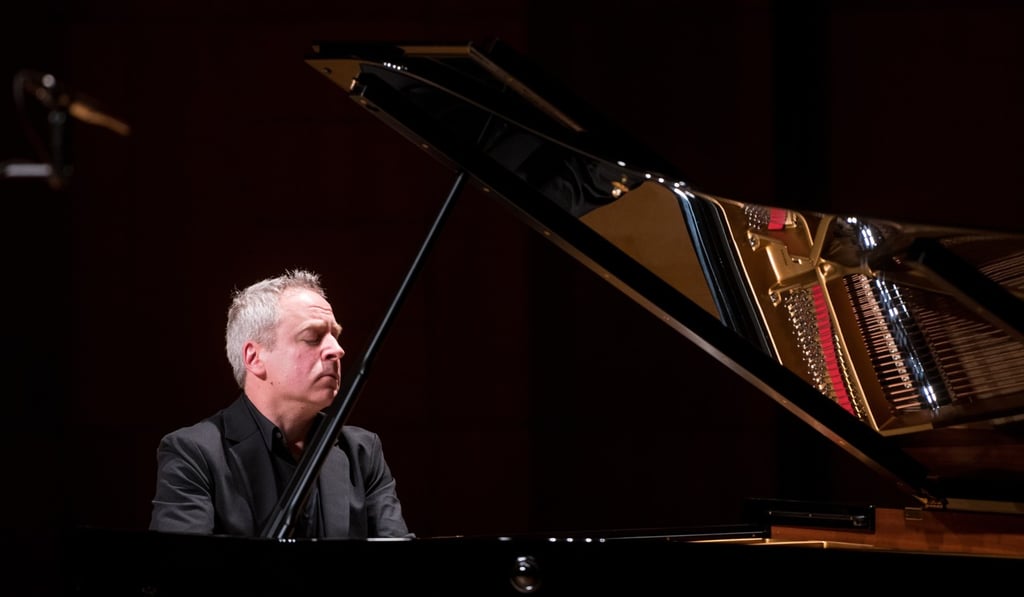
Conducting with his other hand when a single hand was playing, as another American pianist, Glenn Gould, famously did, Denk sought to emphasise significant compositional moments both musically and physically. Piercing glances directed at the audience ensured we understood his intent.
To make sure we were with him on the journey, Denk returned with microphone in hand, perhaps with the intention of rationalising his 19th-century stylisation of the Mozart. He mentioned the notion of time and how Mozart and Beethoven approached it differently.