The thrill and the truth of Aretha Franklin: an appreciation
Few performers were so universally idolised by peers and critics and so exalted and yet so familiar to their fans

The clarity and the command. The daring and the discipline. The thrill of her voice and the truth of her emotions.
Like the best actors and poets, nothing came between how Aretha Franklin felt and what she could express, between what she expressed and how we responded. Blissful on “(You Make Me Feel Like) a Natural Woman.” Despairing on “Ain’t No Way.” Up front forever on her feminist and civil rights anthem “Respect.”
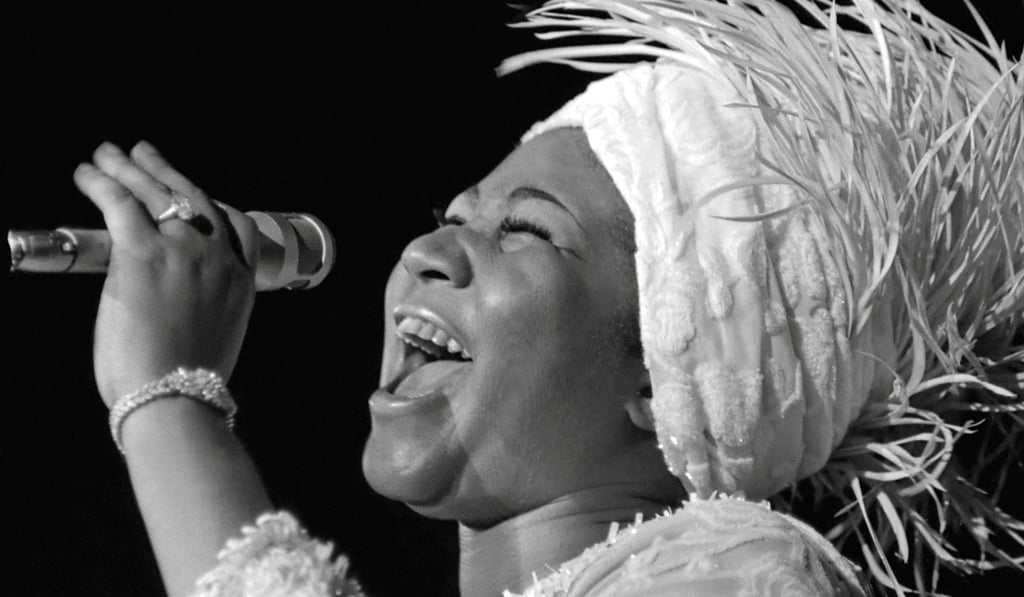
She was “Aretha,” a name set in the skies alongside “Jimi” and “Elvis” and “John and Paul.” A professional singer and pianist by her late teens, a superstar by her mid-20s, she recorded hundreds of songs that covered virtually every genre and she had dozens of hits. But her legacy was defined by an extraordinary run of top 10 soul smashes in the late 1960s that brought to the radio an overwhelming intensity and unprecedented maturity, from the wised-up “Chain of Fools” to the urgent warning to “Think.”
Acknowledging the obvious, Rolling Stone ranked her first on its list of the top 100 singers. Franklin was also named one of the 20 most important entertainers of the 20th century by Time magazine, which celebrated her “mezzo-soprano, the gospel growls, the throaty howls, the girlish vocal tickles, the swoops, the dives, the blue-sky high notes, the blue-sea low notes. Female vocalists don’t get the credit as innovators that male instrumentalists do. They should. Franklin has mastered her instrument as surely as John Coltrane mastered his sax.”
The music industry couldn’t honour her enough: Franklin won 18 Grammy awards and, in 1987, became the first woman inducted into the Rock and Roll Hall of Fame. But her status went beyond “artist” or “entertainer” to America’s first singer, as if her very presence at state occasions was a kind of benediction. She performed at the inaugural balls of Presidents Bill Clinton and Jimmy Carter, at the funeral for civil rights pioneer Rosa Parks and the dedication of Martin Luther King Jnr’s memorial.
In black neighbourhoods and white universities, in the clubs and on the charts, her hits came like cannonballs, blowing holes in the stylised bouffant and chiffon Motown sound
Clinton gave Franklin the National Medal of Arts and President George W. Bush awarded her the Presidential Medal of Freedom, the nation’s highest civilian honour.