How Hong Kong composers recreated lost sounds of the Dunhuang caves
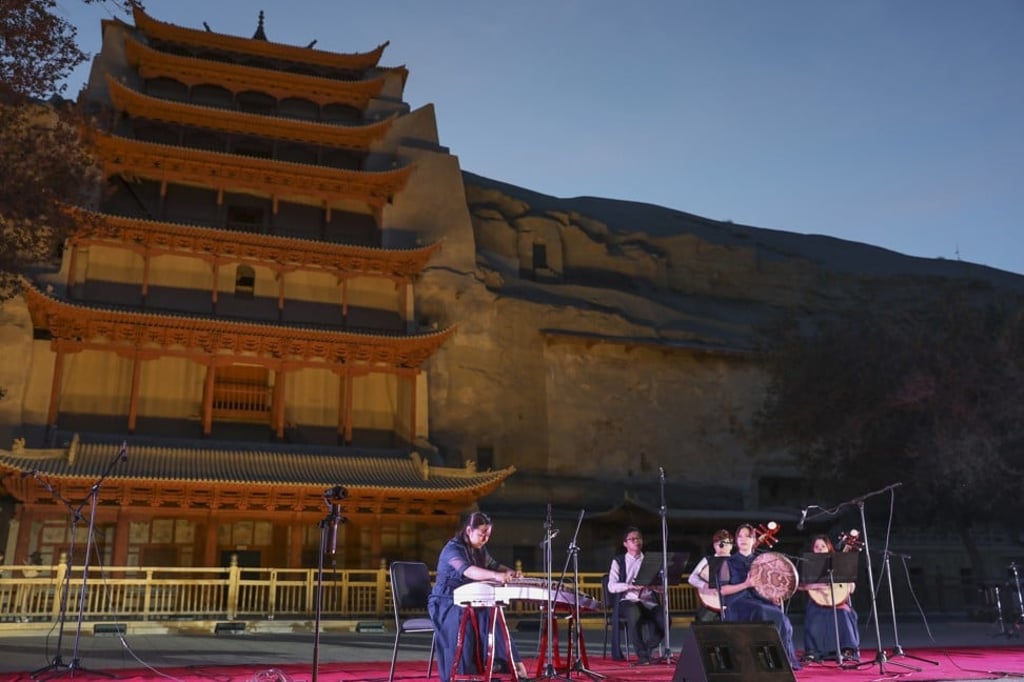
Pair take inspiration from Buddhist murals dating back to the fourth century, and musical scores unearthed in one of the caves, to write nine pieces. A Hong Kong ensemble performed them at the Unesco monument in northwest China

Two young Hong Kong composers have gone to great lengths to recreate the lost sounds of the Dunhuang Buddhist caves, a Unesco World Heritage Site in Gansu province, northwest China.
Chu Kai-yeung and Kahlen Kam Shing-hei took inspiration from musical scores and the story accompanying them that were unearthed in one of the 500 caves, and paintings on the walls of the caves, and found Chinese instrument makers to make replicas of musical instruments depicted in them – a Tang-dynasty sheng, a mouth organ consisting of vertical pipes and a konghou, a Chinese harp last played in the Ming dynasty.
Art to make you cry: Dunhuang cave murals inspire musicians
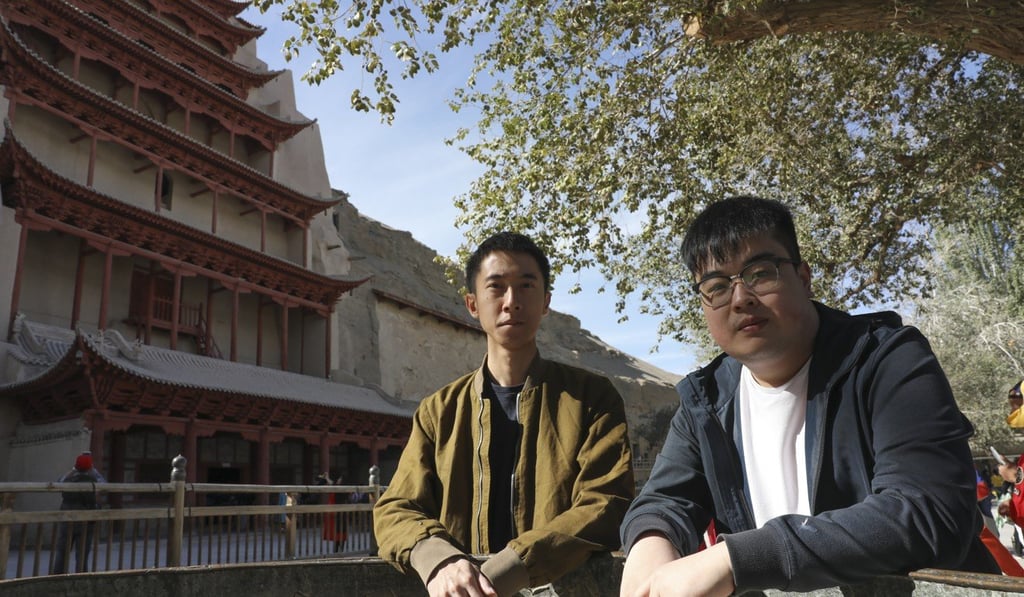
While their task was a challenging one – Kam had little experience of writing Chinese music, and had to spend a great deal of time and effort to learn the range and tone of each instrument, for example – they did have one advantage when writing the nine pieces they produced, says Chu, 22, who is studying composition at the Hong Kong Academy for Performing Arts.
“There is no recording. I cannot restore the music from that era. But precisely because of that, there is a huge space for us to make our own interpretation. [The script] offers many clues but there are no absolute answers,” he says.
The story found with the musical scores, Sorrow of a Changsha Woman, is the tale of the daughter of a governor who suffered an unfortunate fate and had to make a living by dancing. Chu used this a reference for the mood and tempo of one of the pieces he wrote.
Kam, 26, who studied composition at the academy and is pursuing a master’s degree in Buddhist Studies at the University of Hong Kong, combined three elements in his work Music in Heaven: a Chinese folk tune, Western musical scales and a Buddhist chanting motif.