China’s middle class spend less as they scrimp and save for their children’s education
Parents prioritise school fees and tutoring costs but forgo other spending that the government is counting on to stabilise economic growth

China’s middle class is something of a mythical entity, with wide-ranging estimates of its size and economic power. Optimists believe a large and growing middle class has the ability to lift China and even the world to a more prosperous level, while pessimists foresee an increasingly burdened group that could cause the economy to stagnate and even lead to political chaos. In this, the last of a four-part series, the South China Morning Post continues to examine the myth to reveal the economic and political implications of its evolution.
It’s a Sunday afternoon, and Amy Jiang is rushing through a packed lunch with her seven-year-old daughter outside her classroom in a shabby building in Beijing. They are on a break between two lessons, each two hours, given by an after-school tutoring company.
Like millions of middle-class parents on the mainland, Jiang, a 35-year-old engineer, spends most of her weekends attending tutoring sessions with her child.
“I have to be here,” Jiang said. “Some topics are too advanced for kids to understand, such as permutations and combinations in maths, and classical Chinese.”
As the trade war with the United States continues to rage, China’s burgeoning middle class, people like Jiang, are seen by some as a potential white knight for its slowing economy. The purchasing power of the group – ranging from 100 million to 400 million people, according to different estimates – is widely believed to be ballast for the economy. But fresh signs show their high spending on education is sucking up an increasing portion of the family budget and constraining other consumption.
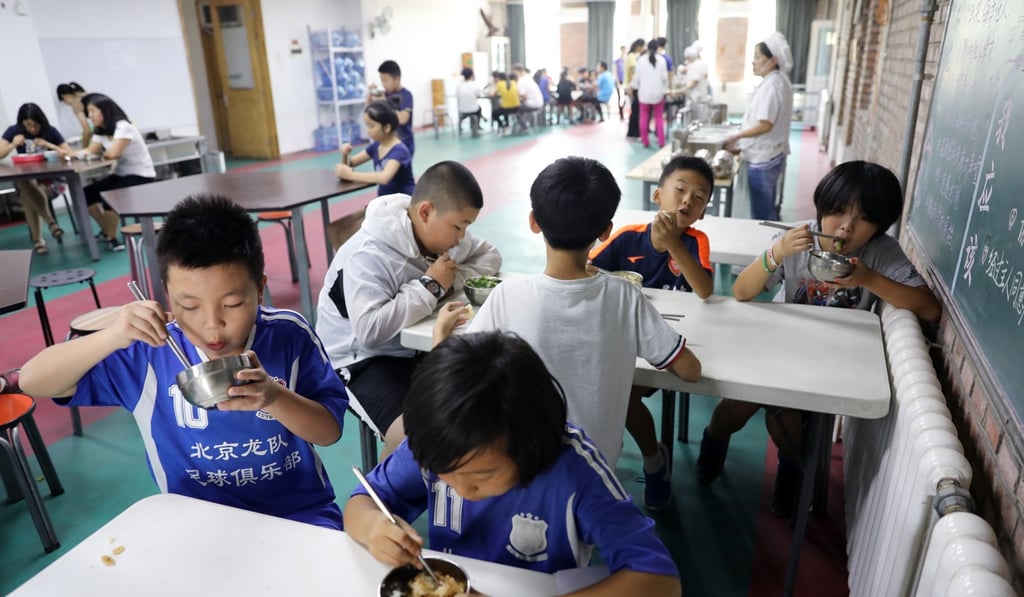
Investing in education
Studying a wider range of subjects in more depth than the public school syllabus requires and getting a head start by studying topics before they are covered in school have become common tactics used by parents trying to help their children compete in a challenging educational environment in China.